
Cold Room Refrigeration System Compliance Guide: Matching DL, DD and DJ Units to Regional Standards
Cold room refrigeration system compliance is rarely lost on the plant floor. It is lost earlier, in the specification document, where a room becomes a temperature band, the band becomes an air cooler series, and the series becomes a set of nameplate values that a reviewer will later check against local rules.
This guide is written for buyers in the awareness and research stage who must specify cold storage in more than one market. It explains how the DL, DD and DJ air cooler series map to room temperatures, how voltage, refrigerant and compressor choices interact with regional requirements, and how to document a component-level bill of materials so a compliance review has something concrete to examine.
Clevier Refrigeration (Jiangsu) Co., Ltd. is a refrigeration equipment manufacturer established in 2023 and based in Wujin District, Changzhou City, Jiangsu Province, China. The company operates a 10,000 m² facility with approximately 50 staff, an annual production capacity of 10,000 units and a two-engineer R&D team, and supplies cold room refrigeration systems, condensing units, cold room air coolers, evaporators, air cooled condensers, polyurethane insulated panels and related cold room equipment. Export business accounts for 30% of total sales, with major markets in Asia, South America, Africa and North America.
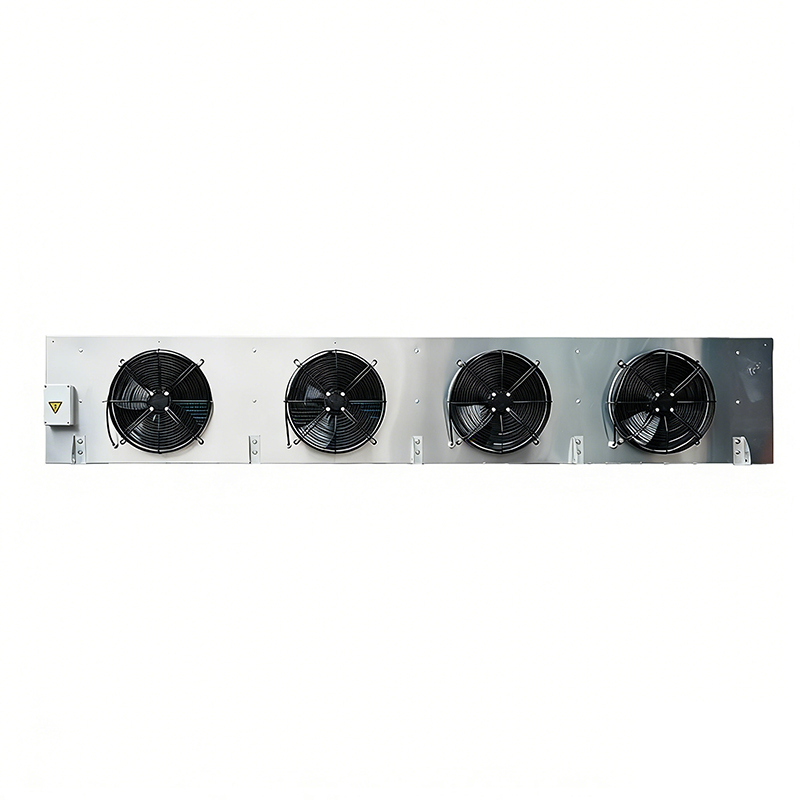
DJ series low temperature air cooler — the series used when a project's declared duty goes below −25°C.
Problem Definition: Why Cold Room Compliance Fails at Component Level
A compliance review asks a simple question: does the delivered equipment match what was declared, and does the declaration satisfy the rules of the destination market? In practice, three failure patterns repeat.
- The room is declared as a single temperature, but the hardware is chosen by capacity only. A freezer room written as “−18°C” can be served by more than one evaporator arrangement. When the series (DL, DD or DJ) is not written into the order, the reviewer has no stated basis to check the coil, the defrost method or the airflow.
- Voltage is declared without frequency. “380V” alone does not define an electrical identity. Clevier builds across 220V and 380V with 50Hz or 60Hz customization, so a project spanning two markets can leave the factory with two different electrical builds unless the frequency is frozen on the data sheet.
- Refrigerant is named in the quotation but not in the component list. R404A, R507A and R22 are all listed configuration options on Clevier condensing units. If the refrigerant appears only in the commercial offer and not in the technical annex, the refrigerant declaration and the equipment list will disagree at the documentation stage.
The underlying problem is that a cold room refrigeration system is a matched assembly, not a single appliance. The Cold Room Refrigeration System supplied by Clevier includes condensing units, air coolers and cold room door systems, including cold room electric sliding door control systems, semi-hermetic and open-type refrigeration condensing units and cold room air coolers (evaporators), built from steel, stainless steel, aluminum and copper components. Each of those lines is a separate item on a compliance file, and each can be customized, which means each must be specified rather than assumed.
Industry Background: A Fragmented Supply Base With Documented Rules
The refrigeration equipment market reached USD 67.06 billion in 2024, according to the global refrigeration equipment report published by Refindustry / Research and Markets covering 2025–2030. In the same year, the five largest OEMs — Carrier, Johnson Controls, Daikin, Trane and Ingersoll Rand — held a combined 25.2% revenue share, based on the same commercial research. The practical reading is straightforward: most installed cold room capacity is engineered and documented by manufacturers outside that top group, and the documentation burden therefore lands on mid-sized suppliers and their buyers rather than on a handful of corporate compliance departments.
“Regional standards” is not one document. Refrigeration safety, electrical supply characteristics, refrigerant acceptability, energy performance and customs classification are separate rule sets, often administered by different authorities in the same country. Two reference points illustrate the difference. The 2024 International Mechanical Code, Chapter 11, published by the International Code Council, is a regulatory standard for refrigeration system installation and testing. Separately, refrigeration systems using carbon dioxide (CO2) must comply with IIAR CO2 standards and ASHRAE 15. A buyer specifying in more than one market therefore needs the equipment identity to be stable while the rule references change.
Customization is normal in this category rather than exceptional. Clevier supports OEM/ODM work covering cooling capacity, temperature range, voltage, refrigerant, compressor selection, panel structure and complete system matching, and the Cold Room Refrigeration System is specified for applications requiring temperatures from −40°C to +10°C with 220V or 380V power supply and project-based installation. That flexibility is commercially useful and compliance-critical at the same time: anything customizable is something that must be pinned down in writing.
Detailed Solution: Matching DL, DD and DJ Series to Project and Rule Requirements
The Cold Room Air Cooler range is organized into three series defined by temperature band. The series is the first compliance decision, because it determines the room type the equipment is declared for and the defrost regime that must appear in the electrical documentation.
DL series — fresh keeping and chiller rooms. The DL series is designed for fresh keeping and chiller room temperatures around 0°C to +10°C. It is the series to declare when the room's stated purpose is chilled storage rather than freezing, and it is the series that most often needs to be justified in a document where the room is described loosely as a “cold room.”
DD series — freezer rooms. The DD series is designed for freezer room temperatures around −18°C. It is the reference point for frozen storage, and model designations in the wider Cold Room Air Cooler line include DD-30, DD-100, DD-350, DCL401/2.1(DD-20), DCL401/4.5(DD-40) and DCL404/19.2(DD-170), which is the level of identification a compliance annex should carry.
DJ series — low temperature and blast freezing. The DJ series is designed for low temperature and blast freezer duty at −25°C and below. Because the overall Cold Room Refrigeration System is specified down to −40°C, the DJ series is the component that carries the lowest-temperature portion of a multi-room project.
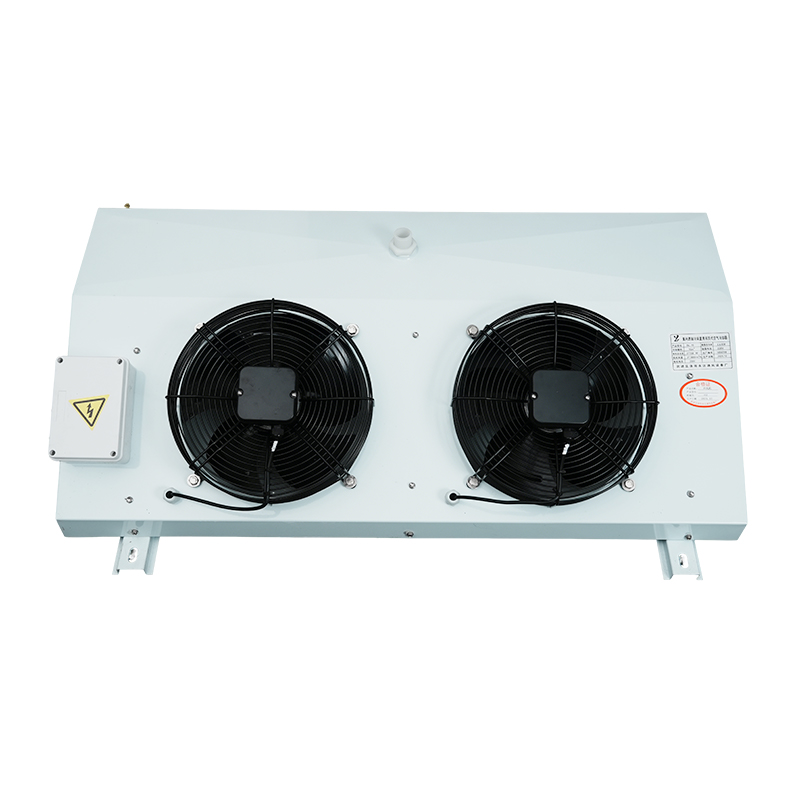
DD type freezer room unit cooler — the evaporator series declared for rooms around −18°C.
Across the family, the Cold Room Air Cooler is offered with air defrost, electric defrost, water defrost and hot gas defrost; ceiling mounted, side discharge and double side discharge structures; galvanized steel, stainless steel or aluminum plate housings; one to four fans of 300 mm to 600 mm diameter; airflow from 1,680 m³/h to 11,800 m³/h; cooling capacity from 2.1 kW to 56.2 kW depending on model; voltage of 220V or 380V at 50Hz or 60Hz customized; and refrigerant options of R404A, R507 or R22.
The defrost choice is the item most often omitted and most often challenged. Air defrost, electric defrost, water defrost and hot gas defrost impose different electrical and piping requirements, so the defrost method belongs on the same data sheet as the temperature band, not in a separate note. Where the room is a walk in freezer operating near −18°C, the DD series and its defrost method should be declared together as one decision.
Voltage, Frequency and Refrigerant: The Three Variables That Break Files
Clevier customizes voltage across the equipment range: 220V or 380V with 50Hz or 60Hz, on cold room air coolers, condensing units and air cooled condensers alike. For a buyer sourcing for several regions, the efficient approach is to treat the electrical identity as a fixed field in the specification template — voltage, frequency, and the market it is intended for — and to require every quotation line to repeat it. A refrigeration condensing unit, a cold room evaporator and an air cooled condenser in the same project should never carry conflicting electrical declarations.
Refrigerant is the second variable. R404A, R507A and R22 are listed configuration options for Clevier condensing units, and R404A, R507 and R22 for the air cooler range. Which of these is acceptable in a given market is a jurisdictional question that the buyer's own compliance adviser must answer; the supplier's task is to build the equipment around the approved choice and to state it consistently on the data sheet, the component list and any refrigerant declaration. Where a project moves toward CO2, the referenced framework changes, and systems using CO2 must comply with IIAR CO2 standards and ASHRAE 15.
Compressor Brand and Type: Naming the Installed Component
Clevier condensing units are offered with Copeland or Bitzer compressors, in hermetic scroll or semi-hermetic piston configurations, with cooling capacity suitable for 3HP to 30HP refrigeration applications. Because the compressor brand is an option rather than a fixed feature, it must be written into the order and repeated in the technical annex; “brand-name compressor” is not a specification a reviewer can check. The same logic applies to the condensing unit structure: air cooled, water cooled, box type and open type configurations are all available, and the structure changes the physical footprint and piping arrangement that the site documentation must describe.
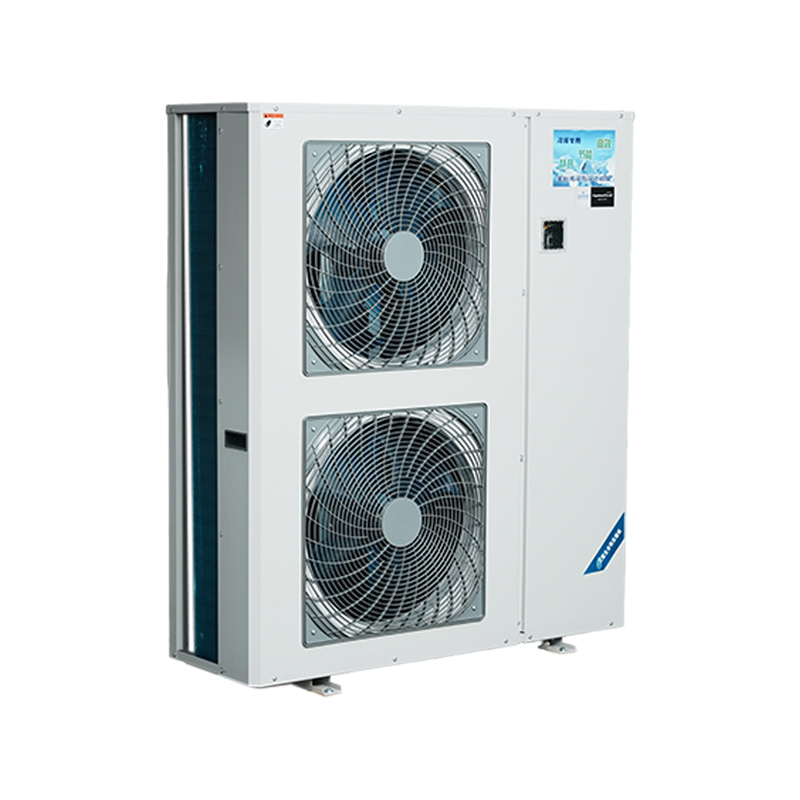
Box type refrigeration unit — one of several condensing unit structures that must be named in the bill of materials.
Building the Component-Level Bill of Materials
A bill of materials for a cold room refrigeration system should be assembled at component level, because that is the level at which reviewers and customs authorities ask questions. A workable structure has five blocks.
- Condensing unit block. Configuration (air cooled, water cooled, box type, open type or semi-hermetic), capacity in HP, compressor brand and type, refrigerant, voltage and frequency. Copeland describes indoor condensing units as self-contained systems housing the compressor, the condenser coil and the fan assembly, which is a useful working definition of what this block must account for.
- Evaporator block. Series (DL, DD or DJ), model designation, cooling capacity, airflow, fan quantity and diameter, defrost method, housing material and mounting structure.
- Heat rejection block, where separate. Air cooled condensers are offered in H type, V type and U type configurations with copper tube and aluminum fin coils, one to four fans of 300 mm to 600 mm, approximately 22 m² to 400 m² heat transfer area depending on model, and 220V or 380V at 50Hz or 60Hz, matched with condensing units and refrigeration systems.
- Envelope and access block. Polyurethane insulated panels and the cold room door system, including cold room electric sliding door control systems, with the door type and control arrangement stated.
- Control block. The electrical control box and the control system selected for the project, described as part of the customized system configuration.
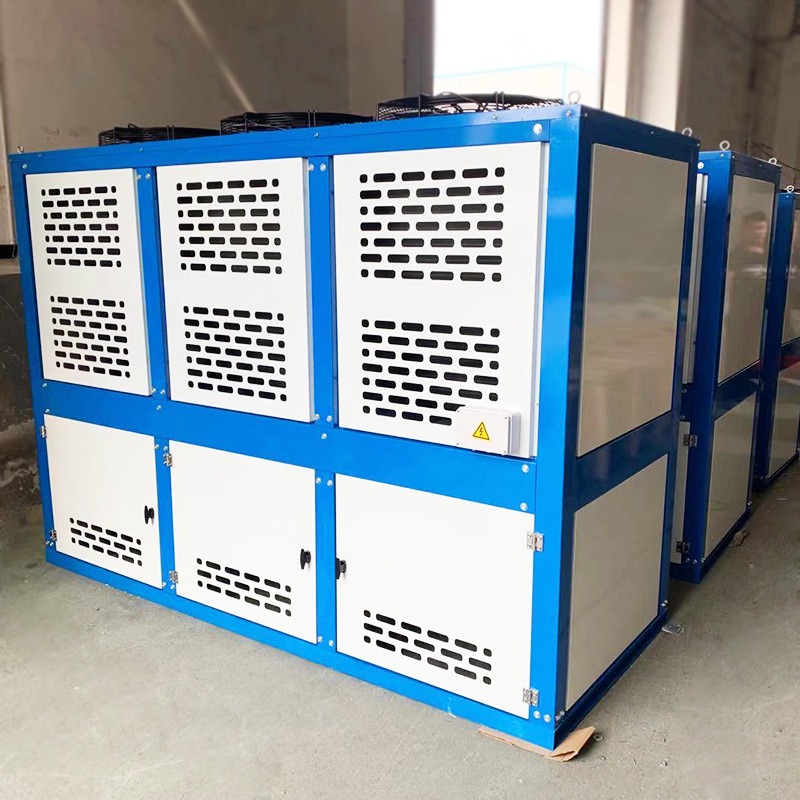
V type air cooled condenser — the heat rejection item that should appear as its own line when it is supplied separately.
Step-by-Step Breakdown: Documenting a System for Compliance Review
The sequence below turns a project brief into a reviewable file. It is written for a buyer preparing a first-round specification, before a supplier is selected.
Step 1 — Declare the duty as a band, not a point. Write the room as a range with its purpose: 0°C to +10°C fresh keeping and chiller room (DL), around −18°C freezer room (DD), or −25°C and below for low temperature and blast freezing (DJ). Where a project spans several rooms, state the overall system envelope as well — the Cold Room Refrigeration System is specified from −40°C to +10°C.
Step 2 — Freeze the electrical identity. Record voltage and frequency as two separate fields (220V or 380V; 50Hz or 60Hz) for every line item, and require the same pair to appear on the condensing unit, the air cooler and any separate air cooled condenser.
Step 3 — Select and declare the refrigerant. Choose from R404A, R507A or R22 for condensing units and R404A, R507 or R22 for air coolers, then confirm acceptability for the destination market before the order is placed. Do not leave the refrigerant to be decided at production.
Step 4 — Name the compressor. Specify Copeland or Bitzer, hermetic scroll or semi-hermetic piston, and the horsepower within the 3HP to 30HP range of the condensing unit line.
Step 5 — Fix the evaporator series and defrost method together. Pair DL, DD or DJ with air, electric, water or hot gas defrost, and add fan quantity, fan diameter and airflow so the reviewer can compare the delivered unit against a stated figure.
Step 6 — Assemble the component-level bill of materials. Use explicit model designations wherever they exist, such as DD-30, DD-100, DD-350, DCL401/2.1(DD-20), DCL401/4.5(DD-40) or DCL404/19.2(DD-170), rather than generic descriptions.
Step 7 — Attach conformity evidence and check its scope. Clevier's public supplier listing describes CE-certified air cooled condensing units using R404A; as with any certificate, the reviewer should confirm which models and which configuration the certificate actually covers before accepting it as evidence for a specific build.
Step 8 — Validate the customs classification. UN Comtrade's official classification area includes refrigerating or freezing equipment under HS heading 8418, which is a starting point rather than an answer; the exact tariff line for a condensing unit, an evaporator or a complete system should be confirmed before shipment.
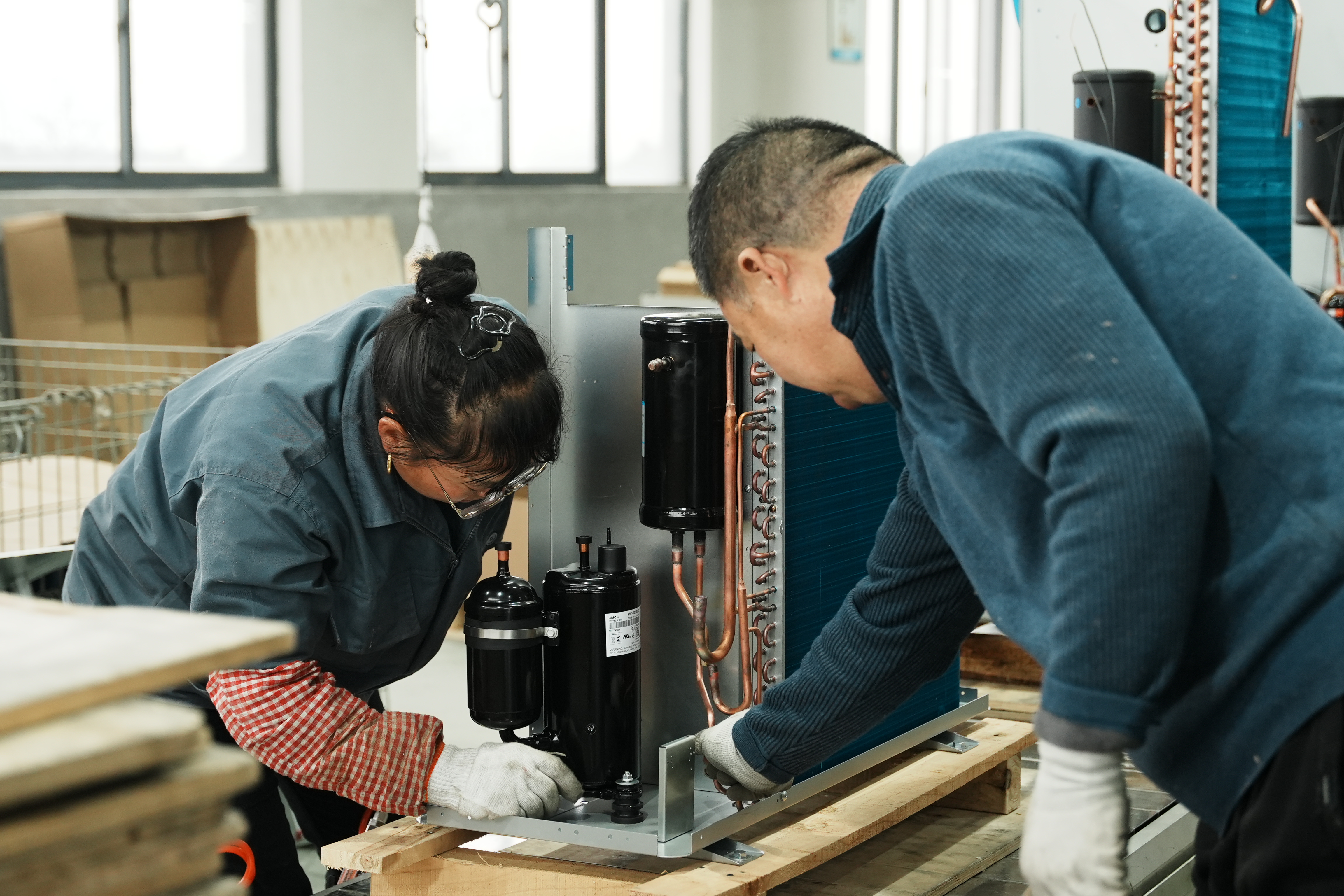
Manufacturing site of Clevier Refrigeration (Jiangsu) Co., Ltd. in Changzhou, Jiangsu Province, China — 10,000 m² with an annual capacity of 10,000 units.
Acceptance criteria to write into the purchase order:
- Temperature band and room purpose match the declared series (DL, DD or DJ).
- Voltage and frequency on the unit match the order line, item by item.
- Refrigerant stated on the unit matches the refrigerant declared in the file.
- Compressor brand and type match the approved configuration.
- Defrost method matches the approved data sheet.
- Fan quantity, fan diameter and airflow fall within the stated figures for the model.
- Housing material (galvanized steel, stainless steel or aluminum plate) and mounting structure (ceiling mounted, side discharge or double side discharge) are as ordered.
- Door system, including electric sliding door control, and control box are listed and described.
Use Cases: Where the Series Decision Carries the Most Risk
Clevier supplies refrigeration solutions for food processing, cold chain logistics, supermarkets, restaurants, agriculture, seafood, meat storage and other industries, and the Cold Room Refrigeration System is intended for cold storage warehouse, food processing, seafood and meat processing industries, designed for cold storage, freezer room and cold chain warehouse scenarios. The series decision matters differently in each.
Food processing, meat and seafood
A processing site usually runs several temperature zones at once: chilled holding, frozen storage and, where applicable, blast freezing. That makes it a mixed-series project in which DL, DD and DJ units may all appear in the same bill of materials. The compliance value comes from listing each room against its own series and defrost method rather than aggregating them under one system description. Copeland lists low-temperature refrigeration applications including cold rooms, freezers, industrial chillers and pharmaceutical storage for a condensing-unit product line, which reflects how broadly the same hardware family is deployed across room types.
Cold chain warehouse and walk in freezer
Cold chain warehouse refrigeration typically combines a large frozen volume with smaller chilled areas. Here the DD series defines the main volume and the declared envelope of the overall system — down to −40°C where low-temperature or blast freezing rooms are included — becomes the reference figure for the whole project. For a single walk in freezer, the same DD decision is made at much smaller scale, but the documentation requirement does not shrink with the room.
Retail, restaurant and light commercial storage
Supermarkets and restaurants are high-turnover, space-constrained environments where the DL series usually serves fresh keeping and chiller rooms. Panasonic presents refrigeration solutions for convenience stores, supermarkets, service stations and cold rooms, which illustrates how widely these smaller formats are specified. In these projects the practical compliance risk is not the temperature band but the electrical identity and the door and control arrangement, both of which are customizable and therefore must be stated.
Comparison Table: Series and Configuration at a Glance
The table below compares the three air cooler series on the parameters that appear in a compliance file. Values are the published series positions; family-level figures follow beneath the table.
| Series | Temperature band | Typical room | Defrost options | Structure options |
|---|---|---|---|---|
| DL | 0°C to +10°C | Fresh keeping / chiller room | Air, electric, water or hot gas defrost | Ceiling mounted, side discharge, double side discharge |
| DD | Around −18°C | Freezer room | Air, electric, water or hot gas defrost | Ceiling mounted, side discharge, double side discharge |
| DJ | −25°C and below | Low temperature / blast freezer | Air, electric, water or hot gas defrost | Ceiling mounted, side discharge, double side discharge |
Shared Cold Room Air Cooler parameters: cooling capacity 2.1 kW to 56.2 kW depending on model; airflow 1,680 m³/h to 11,800 m³/h; 1 to 4 fans of 300 mm to 600 mm; housing in galvanized steel, stainless steel or aluminum plate; 220V or 380V at 50Hz or 60Hz customized; refrigerant R404A, R507 or R22.
The second table compares condensing unit configurations on the same basis, since the structure is a specification item rather than a packaging detail.
| Configuration | Compressor options | Refrigerant options | Capacity | Voltage / frequency |
|---|---|---|---|---|
| Air Cooled Condensing Unit | Copeland or Bitzer; hermetic scroll or semi-hermetic piston | R404A / R507A / R22 | 3HP to 30HP | 220V / 380V, 50Hz / 60Hz |
| Water Cooled Condensing Unit | Copeland or Bitzer; hermetic scroll or semi-hermetic piston | R404A / R507A / R22 | 3HP to 30HP | 220V / 380V, 50Hz / 60Hz |
| Box Type Condensing Unit | Copeland or Bitzer; hermetic scroll or semi-hermetic piston | R404A / R507A / R22 | 3HP to 30HP | 220V / 380V, 50Hz / 60Hz |
| Open Type Condensing Unit | Copeland or Bitzer; hermetic scroll or semi-hermetic piston | R404A / R507A / R22 | 3HP to 30HP | 220V / 380V, 50Hz / 60Hz |
| Semi-hermetic Condensing Unit | Semi-hermetic piston; Copeland or Bitzer | R404A / R507A / R22 | 3HP to 30HP | 220V / 380V, 50Hz / 60Hz |
All configurations are available with OEM/ODM support and can be customized by compressor brand, horsepower, refrigerant, voltage and control system. Application temperature covers fresh keeping room, chiller room, freezer room and low temperature cold storage.
FAQ
1. What should a compliance reviewer expect to see for a cold room refrigeration system?
The reviewer should see five linked statements: the room duty as a temperature band; the evaporator series and defrost method (DL or DD or DJ, with air, electric, water or hot gas defrost); the electrical identity as voltage plus frequency (220V or 380V, 50Hz or 60Hz); the refrigerant (R404A, R507A or R22 on condensing units; R404A, R507 or R22 on air coolers); and the compressor brand and type (Copeland or Bitzer, hermetic scroll or semi-hermetic piston). The component list should follow, covering condensing units, cold room air coolers, the door system including electric sliding door control, panels and the control box. Where local codes apply, the buyer's authority determines the edition; for reference, the 2024 International Mechanical Code Chapter 11 is a regulatory standard for refrigeration installation and testing, and CO2 systems must comply with IIAR CO2 standards and ASHRAE 15.
2. Can one supplier cover DL, DD and DJ units plus matched condensing units for a mixed-temperature project?
Clevier's Cold Room Refrigeration System is specified for applications requiring temperatures from −40°C to +10°C and includes condensing units, air coolers and cold room door systems, including semi-hermetic and open-type refrigeration condensing units and cold room air coolers (evaporators). The air cooler line covers the DL, DD and DJ bands with model designations such as DD-30, DD-100, DD-350, DCL401/2.1(DD-20), DCL401/4.5(DD-40) and DCL404/19.2(DD-170), and the condensing unit line runs from 3HP to 30HP with Copeland or Bitzer compressor options. OEM/ODM support is available for capacity, temperature range, voltage, refrigerant, compressor selection, panel structure and complete system matching, from a 10,000 m² facility with annual capacity of 10,000 units.
3. What configuration variables drive the cost of a compliant system?
Clevier does not publish a price list, because cost is a function of the configuration. The variables that change a quotation are: temperature band and therefore series; defrost method; compressor brand and type (Copeland or Bitzer, hermetic scroll or semi-hermetic piston); horsepower within the 3HP to 30HP range; refrigerant; voltage and frequency; condensing unit structure (air cooled, water cooled, box type or open type); fan quantity and diameter on the air cooler; housing material (galvanized steel, stainless steel or aluminum plate); the door system and electric sliding door control; and the control system. A configuration-based quotation itemised against these fields is more useful than a single lump figure, because each line can be checked against the specification.
4. How can the configuration be validated before a full order?
The validation step is to convert the brief into a written configuration and have it confirmed line by line before production. Because OEM/ODM customization is available across cooling capacity, temperature range, voltage, refrigerant, compressor selection, panel structure and system matching, the configuration sheet — series, model designation, capacity, airflow, fan quantity, defrost, voltage and frequency, refrigerant, compressor brand and structure — is the document that both sides sign. Clevier's 2026 English product catalog can be downloaded for reference before that discussion, and any conformity evidence, such as the CE-certified air cooled condensing units described in Clevier's public supplier listing, should be checked for the exact models and configuration it covers.
5. How do I shortlist cold room refrigeration system suppliers and confirm delivery timing?
Shortlist on five checks: whether the supplier covers the full temperature band you need; whether evaporator series and condensing unit configurations are matched from one source; whether OEM/ODM customization is offered for the parameters you intend to declare; whether the factory capacity and export experience fit your volume — Clevier operates a 10,000 m² facility with annual capacity of 10,000 units, exports 30% of total sales and serves Asia, South America, Africa and North America; and whether documentation can be issued at component level. Delivery timing is configuration-dependent and is not published, so it should be requested in writing against the confirmed configuration rather than assumed. Buyers who want to start that process can contact Clevier Refrigeration with their room schedule and declared parameters.
Conclusion: Compliance Is a Specification Habit
A cold room refrigeration system passes review when the same facts appear in the same form on the quotation, the data sheet, the nameplate, the refrigerant declaration and the customs entry. The DL, DD and DJ series give the project a clear temperature language: 0°C to +10°C for fresh keeping and chiller rooms, around −18°C for freezer rooms, and −25°C and below for low temperature and blast freezing, within an overall system envelope of −40°C to +10°C. Voltage, frequency, refrigerant and compressor brand are the variables that regional rules attach to, and all of them are customizable — which is precisely why they belong in writing rather than in a conversation.
Build the bill of materials at component level, name the compressor, fix the defrost method, and check the scope of any conformity evidence before you rely on it. Clevier Refrigeration (Jiangsu) Co., Ltd. supplies cold room refrigeration systems, condensing units, cold room air coolers, air cooled condensers and insulated panels with OEM/ODM support, and can work from a room schedule to a configuration-based quotation. Download the Clevier 2026 product catalog, or send your declared parameters for a written quotation.
Request a configuration-based quotation
Send your room schedule with temperature band, voltage and frequency, refrigerant and preferred compressor brand. Clevier will return a component-level configuration covering condensing unit, air cooler series, door system and controls.
WhatsApp: +86 18112512530 · Tel: +86 132-7039-6182 · Contact: Sherwin
Email: ranerraner@cleviercool.cn · Web: www.cleviercool.com
Address: Wujin District, Changzhou City, Jiangsu Province, China
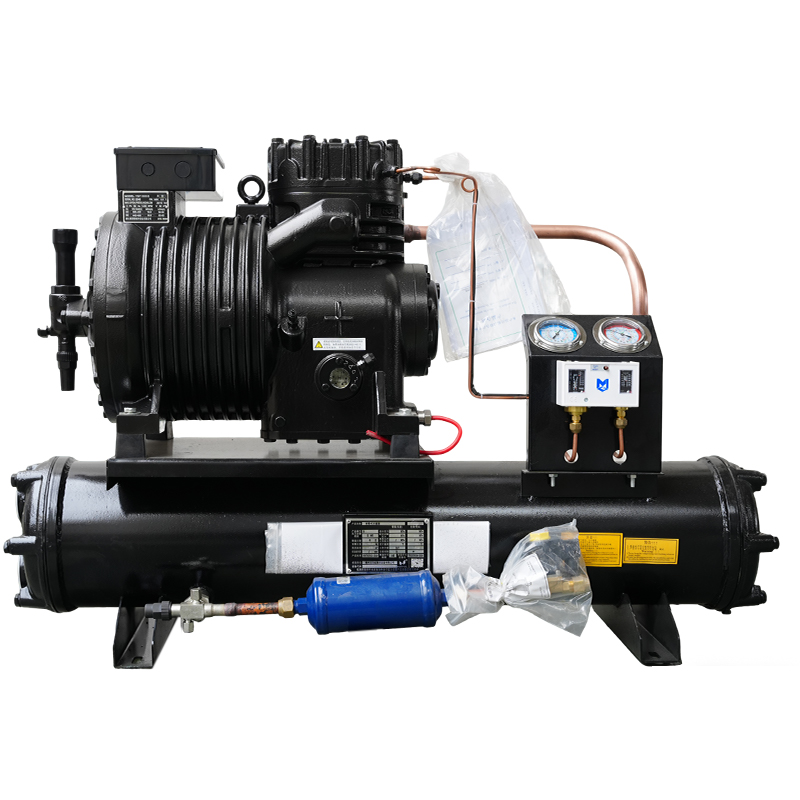
Semi-hermetic refrigeration condensing unit — available with Copeland or Bitzer compressor options and R404A, R507A or R22 refrigerant.
Have Questions or Need More Details?
Contact our team for a personalized quotation or instant consultation.
Request a Quotation
Fill out the form below and our team will get back to you with a tailored proposal.
WhatsApp Direct Chat
Prefer to chat in real-time? Message us on WhatsApp for instant assistance & quick answers.
- Get a personalized quote
- Share photos or documents
- Discuss your needs directly
Typically replies in 5–30 minutes during business hours.