
Sizing a Cold Room Refrigeration System: HP, Air Cooler Series and Defrost Selection
Technical guide · Cold room system matching
Short answer: Size a cold room refrigeration system in three linked steps. First, fix the room temperature band. Second, select the air cooler series: DL for fresh keeping and chiller rooms around 0°C to +10°C, DD for freezer rooms around -18°C, and DJ for low-temperature duty at -25°C and below. Third, match a 3HP–30HP condensing unit and choose a defrost method — air, electric, water or hot gas — that suits the room's frost pattern. The three choices should be confirmed together because a change in temperature band changes the air cooler series, the defrost method and often the condensing unit frame.
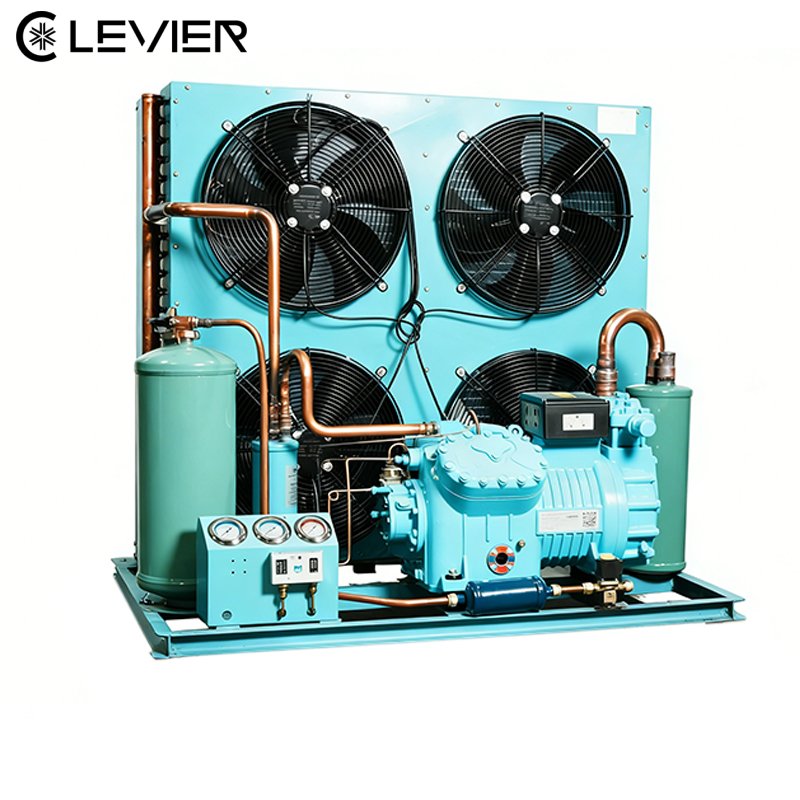
A cold room refrigeration system is not specified by one number. It is a matched assembly: a condensing unit, an air cooler or evaporator, a defrost method, electrical components, controls and the cold room envelope. The sizing decision becomes easier when the temperature band is treated as the primary input, because the temperature band narrows the air cooler series before horsepower is discussed.
This guide is written for buyers, contractors and project engineers who are comparing configurations at the research and evaluation stage. It explains how 3HP–30HP condensing units, DL/DD/DJ air cooler series and four defrost methods fit together. It does not replace a project-specific heat load calculation, but it shows the order of decisions that makes a supplier quotation easier to compare.
Problem Definition: Why Cold Room Sizing Fails Before the Equipment Is Selected
Most sizing errors are interface errors. The arithmetic may be correct, but the assumptions behind it belong to a different room. A system selected for a +2°C chiller room will not behave like a system selected for a -18°C freezer room, even when both use a condensing unit and an air cooler. The difference sits in the air cooler series, the fin spacing and defrost strategy, the evaporating temperature and the compressor duty.
Three failure modes are common:
- Temperature band mismatch. A DL air cooler is specified for a room that will run below 0°C, or a DD/DJ unit is selected without confirming the actual operating band.
- HP-only matching. A 3HP–30HP condensing unit is chosen by horsepower alone, without matching evaporator capacity, air volume, voltage and refrigerant at the design condition.
- Defrost mismatch. Air defrost is used where frost accumulation is heavy, or electric, water or hot gas defrost is selected without confirming controls, power and system architecture.
Project inputs still required: room dimensions, insulation, product load, entry temperature, ambient conditions, door openings, occupancy and defrost cycle. This article explains the selection logic; final equipment selection requires a project-specific calculation.
Industry Background: What the Cold Chain Data Says About System Matching
Industrial refrigeration is a large equipment category, and most of it is built around matched assemblies rather than a single box. Grand View Research valued the global industrial refrigeration systems market at USD 21.3 billion in 2024, with Asia Pacific accounting for 32.6% of revenue. Stratview Research valued the global condensing unit market at USD 42 billion in 2023 and reported a CAGR of 7.95%. Grand View Research also estimated that the -18°C to -25°C frozen segment held about 63% of the cold storage market in 2025, and that Food & Beverages accounted for over 76.8% of global cold chain market revenue in 2025.
Those figures describe a market where frozen and chilled food storage dominates, and where the condensing unit remains a central building block. For a buyer, the practical implication is simple: the cold room refrigeration system is a matching problem. The condensing unit, air cooler, defrost method and electrical package need to be specified as one system, because a change on one side usually changes the duty on the other.
Detailed Solution: The Three Decisions That Define the System
Cold room system matching can be reduced to five linked decisions: temperature band, air cooler series, condensing unit HP, defrost method, and electrical/refrigerant/mechanical configuration. Clevier Refrigeration (Jiangsu) Co., Ltd. is a refrigeration equipment manufacturer based in Changzhou, Jiangsu, China. It produces cold room refrigeration systems, condensing units, air coolers, evaporators, air cooled condensers and polyurethane insulated panels for food processing, cold chain, supermarket, restaurant and agricultural projects. Its cold room refrigeration system data covers a temperature range of -40°C to +10°C and OEM/ODM customization.
1. Temperature Band Comes First
The air cooler series is the first filter, not the last. In the Clevier air cooler range, DL series units are intended for fresh keeping and chiller rooms around 0°C to +10°C. DD series units are intended for freezer rooms around -18°C. DJ series units are intended for low-temperature and blast freezing applications at -25°C and below. If the room is designed to cross from chilled to frozen duty, the specification should be written for the lowest operating band, not the average.
Temperature band also changes the defrost requirement. A chiller room with short frost cycles behaves differently from a freezer room that accumulates frost over longer runs. That is why the air cooler series and defrost method should be selected together.
2. HP Is a Frame, Not a Capacity Guarantee
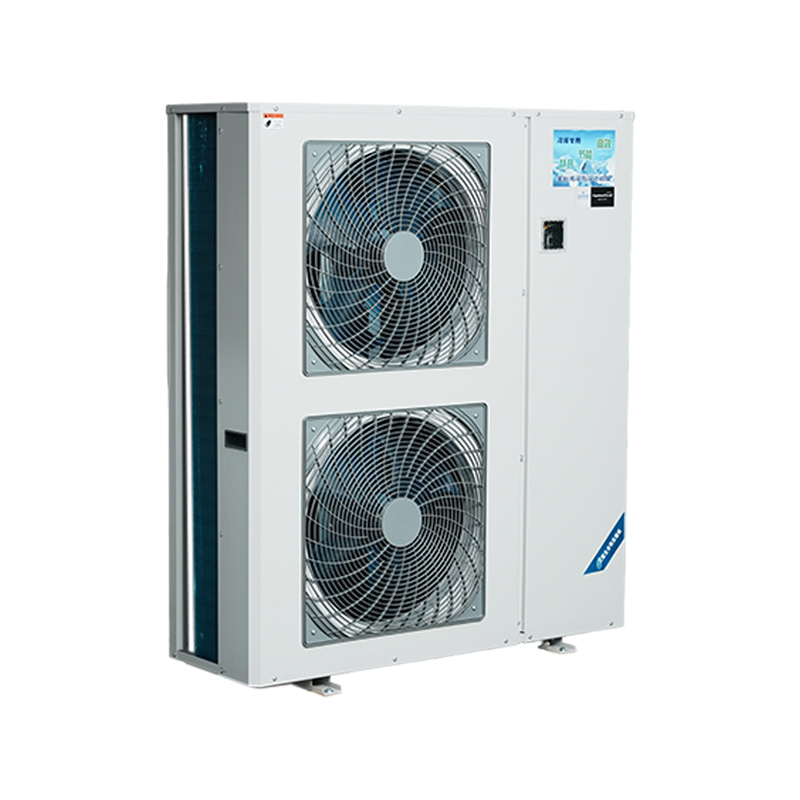
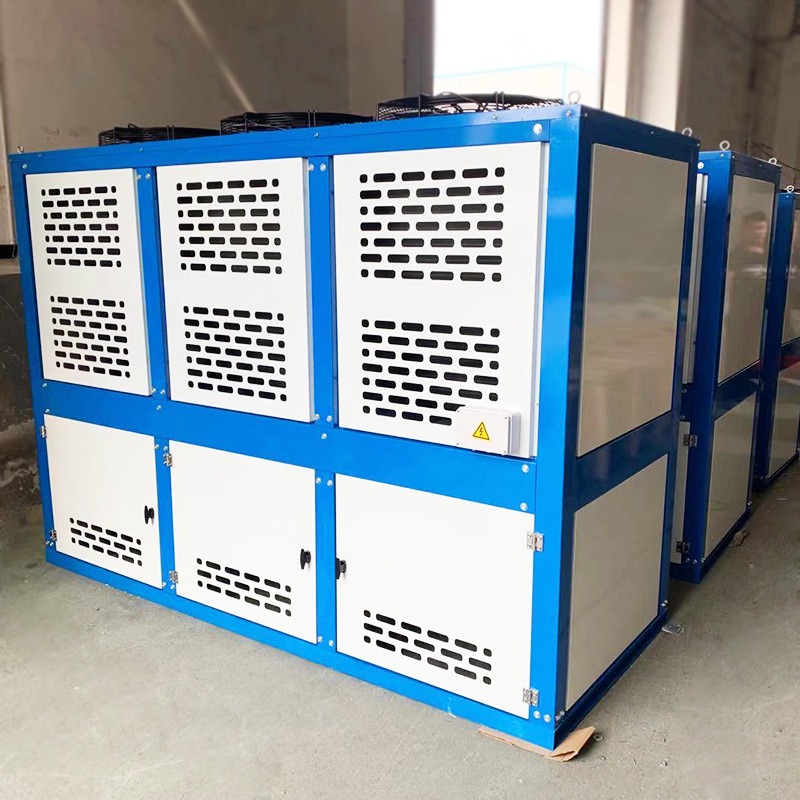
The condensing unit range covers 3HP–30HP. The product data lists air cooled and water cooled condensing units, box type and open type structures, hermetic scroll compressors and semi-hermetic piston compressors, with Copeland or Bitzer compressor options. Refrigerant options are R404A, R507A and R22. Voltage and frequency are customizable at 220V or 380V and 50Hz or 60Hz.
HP is a compressor frame reference. The required HP for a project depends on the room load at the design evaporating and condensing conditions, not on room volume alone. Two rooms with the same volume can require different HP if one has a high product entry load, frequent door openings, a warmer ambient or a lower room temperature. For that reason, the condensing unit should be selected after the room load and temperature band are fixed, and then matched to the air cooler capacity and air volume.
3. Air Cooler Selection: Series, Fans and Air Volume
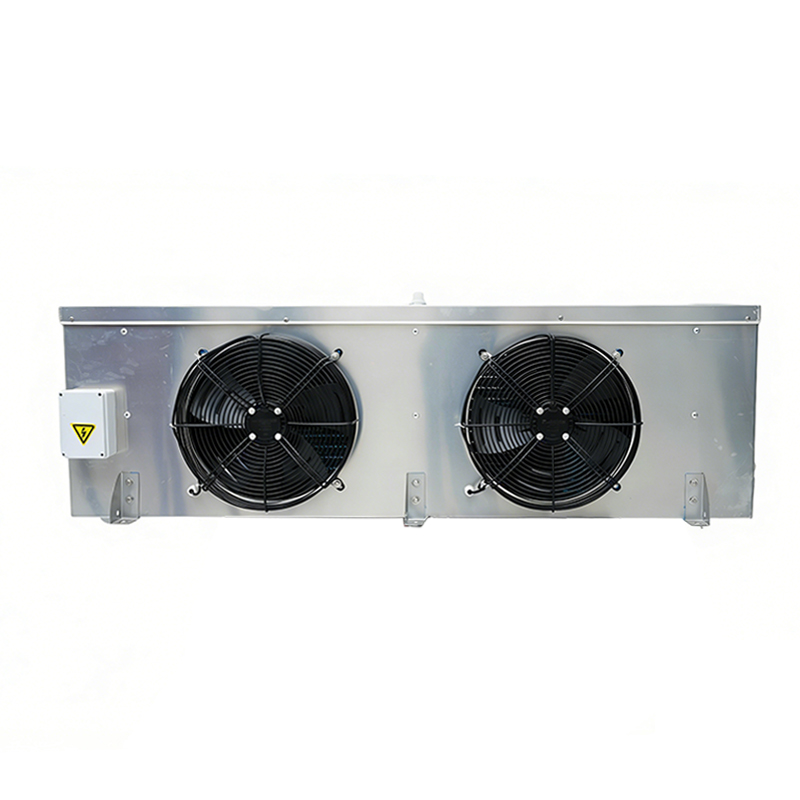
The air cooler — also described as a cold room evaporator or unit cooler — is where the room's heat is absorbed. The Clevier cold room air cooler range covers DL, DD and DJ series, with cooling capacity from 2.1kW to 56.2kW depending on model. Fan quantity is 1–4 fans, fan diameter is 300mm–600mm, and air volume is 1,680m³/h–11,800m³/h. Voltage is 220V or 380V at 50Hz or 60Hz, and the refrigerant listing is R404A, R507 and R22. Housing options include galvanized steel, stainless steel and aluminum plate, with ceiling mounted, side discharge and double side discharge structures.
Fan quantity and fan diameter are not cosmetic choices. They affect air throw, coverage and the match between the air cooler and the room geometry. A long, narrow room and a low, wide room may need different air distribution even when the cooling capacity is similar. The air cooler should be selected with the room layout in view, not only by capacity.
4. Defrost Selection Follows the Frost Pattern
The air cooler range offers air defrost, electric defrost, water defrost and hot gas defrost. Air defrost uses room air to clear frost from the coil. Electric defrost uses heaters. Water defrost uses water to remove frost. Hot gas defrost uses hot discharge gas from the refrigeration system. Each method has a different fit, and the choice should be confirmed with the supplier and the project's control strategy.
Defrost selection is not a preference. It is a response to temperature band, humidity, frost rate, water availability, electrical capacity, compressor architecture and controls. A method that works in a +5°C chiller room may not be suitable for a -25°C blast freezer. The safest approach is to state the room's operating pattern and let the system matcher confirm the defrost method against the air cooler series.
5. Electrical, Refrigerant and Mechanical Matching
Once the temperature band, air cooler series, HP and defrost method are fixed, the remaining specification is mechanical and electrical. Voltage and frequency must match the destination market: 220V or 380V, 50Hz or 60Hz. Refrigerant must be confirmed on both sides of the system: the condensing unit data lists R404A, R507A and R22, while the air cooler data lists R404A, R507 and R22. Compressor selection — Copeland or Bitzer, hermetic scroll or semi-hermetic piston — should be confirmed with the HP and refrigerant.
Clevier supports OEM/ODM customization for voltage, size, fan quantity, material, outlet direction and refrigeration system matching. That matters when a project uses a non-standard electrical supply, a restricted plant room, a specific air discharge direction or a complete system package that must fit an existing cold room design. The company also lists customization for HP, compressor brand, refrigerant, control system and condenser matching on the condensing unit side.
Step-by-Step Breakdown: Sizing a System for a Project
Use the following sequence for a project-specific selection. It keeps the temperature band, air cooler series, HP and defrost method from being decided in isolation.
- Define the room's lowest operating temperature and product type. Write the band as a range, for example 0°C to +10°C, around -18°C, or -25°C and below. The lowest band drives the air cooler series.
- Collect load inputs. Room dimensions, panel thickness, product entry temperature, daily throughput, ambient, door openings, occupancy, lighting and defrost allowance. These inputs determine the load; the equipment should not be selected before they are known.
- Select the air cooler series. DL for fresh keeping and chiller rooms, DD for freezer rooms around -18°C, and DJ for low-temperature and blast freezing applications.
- Confirm air cooler capacity, fan quantity and fan diameter. Match capacity to the load, then check 1–4 fans and 300mm–600mm fan diameter against room geometry and air throw.
- Select condensing unit HP and compressor. Use the 3HP–30HP range, with Copeland or Bitzer compressor options; confirm hermetic scroll or semi-hermetic piston, air cooled or water cooled, and box or open type.
- Select the defrost method. Air, electric, water or hot gas; confirm with the air cooler series, room temperature, humidity and control system.
- Confirm electrical and refrigerant details. 220V or 380V, 50Hz or 60Hz; R404A, R507A or R22 on the condensing unit side and R404A, R507 or R22 on the air cooler side.
- Confirm mechanical configuration and OEM/ODM details. Size, material, outlet direction, fan quantity, voltage, control system and complete system matching.
- Validate the package. Confirm the condensing unit, air cooler, cold room panel, door system and control components as one system. Clevier's system data lists supporting equipment including cold room panel, refrigeration unit, evaporator and condensing unit.
Use Cases: Where Each Configuration Fits
Fresh keeping and chiller rooms at 0°C to +10°C. DL series air coolers are intended for fruit, vegetable, beverage, supermarket and restaurant storage. Air defrost or electric defrost may be considered depending on frost, humidity and controls. The room load is usually driven by product entry and door traffic rather than by a deep freezing duty.
Freezer rooms around -18°C. DD series air coolers are intended for meat, seafood and frozen food storage. Electric defrost is commonly considered, but the final choice should be confirmed with the supplier because the frost pattern depends on door openings, product load and humidity.
Low-temperature and blast freezing at -25°C and below. DJ series air coolers are intended for low-temperature storage and blast freezing. Hot gas or electric defrost may be considered where the system architecture supports it. The defrost decision is more critical here because the coil can frost quickly and the room cannot tolerate long temperature swings.
Cold chain warehouses. Clevier's application data describes low temperature, high humidity and continuous operation, with 24/7 running and matched equipment including cold room panel, refrigeration unit, evaporator, condensing unit and cold room door. Energy saving and stable performance are listed as special requirements. For a warehouse, the system is usually built from multiple matched units rather than one oversized unit.
Food processing plants. Meat, seafood, fruit and vegetable processing projects use cold room systems for cooling and food preservation. Housing material and outlet direction should be confirmed against washdown, hygiene and room layout requirements. Stainless steel and aluminum plate housings are listed as air cooler options.
Contractor and distributor projects. The case reference covers 1–20 sets per project, custom design, factory direct supply, easy installation and OEM/ODM support. It reports system matching solutions in stable operation for 2–5 years. That is a useful reference point for projects that need repeatable configurations across multiple rooms rather than a single custom unit.
Comparison Table: DL, DD and DJ Air Cooler Series
The table below uses the air cooler product data. It is a selection aid, not a model-selection table; the final model depends on room load and design conditions.
| Selection point | DL series | DD series | DJ series |
|---|---|---|---|
| Typical room band | 0°C to +10°C fresh keeping / chiller | Around -18°C freezer | -25°C and below low temperature / blast freezer |
| Primary application | Fruit, vegetable, beverage, supermarket, restaurant | Meat, seafood, frozen food storage | Low-temperature storage and blast freezing |
| Cooling capacity range | 2.1kW–56.2kW across the air cooler range, depending on model | ||
| Fan quantity | 1–4 fans | ||
| Fan diameter | 300mm–600mm | ||
| Air volume | 1,680m³/h–11,800m³/h | ||
| Defrost options | Air, electric, water, hot gas | ||
| Refrigerant listing | R404A, R507, R22 | ||
| Structure | Ceiling mounted, side discharge, double side discharge customized | ||
Defrost Method Comparison
| Defrost method | How it works | Selection note |
|---|---|---|
| Air defrost | Uses room air to clear frost from the coil. | Often considered for higher-temperature rooms with manageable frost; confirm cycle and controls. |
| Electric defrost | Uses heaters to remove frost. | Often considered where a controlled defrost cycle is needed; confirm electrical capacity and control logic. |
| Water defrost | Uses water to remove frost. | Considered where water is available and the project permits water defrost; confirm drainage and hygiene. |
| Hot gas defrost | Uses hot discharge gas from the refrigeration system. | Considered where the refrigeration system can support hot gas defrost; confirm compressor and pipework design. |
FAQ
What electrical and refrigerant details should be fixed before a cold room system is ordered?
Confirm voltage and frequency, refrigerant and compressor option before the order. The condensing unit data lists 220V or 380V and 50Hz or 60Hz, with R404A, R507A or R22 and Copeland or Bitzer compressor options. The air cooler data lists 220V or 380V and 50Hz or 60Hz, with R404A, R507 or R22. Also confirm the destination-market standard. IEC 60335-2-89:2019 and EN 378:2016 are examples of standards that project teams may reference for commercial refrigerating appliances and refrigerating systems; final compliance depends on the complete system and market.
Can a 3HP–30HP condensing unit range serve both chiller and freezer rooms?
Yes, but not with the same air cooler series and defrost method. A chiller room around 0°C to +10°C would normally use a DL air cooler. A freezer room around -18°C would normally use a DD air cooler. A low-temperature or blast freezing room at -25°C and below would normally use a DJ air cooler. The condensing unit HP is then selected against the room load and design conditions, with the compressor and refrigerant confirmed at the same time.
Which specification choices affect the budget most?
The main cost drivers are the condensing unit HP, compressor brand, refrigerant, defrost method, fan quantity, voltage and mechanical customization. A larger HP frame, a Copeland or Bitzer compressor option, a more complex defrost method, a non-standard voltage or a customized outlet direction can change the configuration and the quotation. The lowest-cost approach is to fix the temperature band and load first, then compare quotations on the same technical basis.
Can I order one set to validate a configuration before a larger project order?
Yes. Clevier lists a MOQ of 1 set for sample or system order. The quality-control process includes 100% testing before shipment, performance testing and pressure testing. A single-set sample is useful for confirming voltage, refrigerant, fan quantity, defrost method, outlet direction and system matching before a multi-room order.
What is the typical lead time, and what should be confirmed first?
The listed lead time is 15–30 days, depending on order quantity. The configuration should be confirmed first, because the lead time depends on the selected HP, air cooler series, defrost method, voltage, refrigerant, fan quantity, outlet direction, compressor brand and system matching. For a project quotation or sample request, provide the room temperature band, load inputs and electrical supply so the condensing unit and air cooler can be matched together.
Conclusion
Cold room sizing is not a single number. It is a matched decision: temperature band → air cooler series → condensing unit HP → defrost method → electrical and mechanical configuration. For a DL chiller room, the answer may be a DL air cooler with a 3HP–30HP condensing unit and air or electric defrost. For a DD freezer room, the answer shifts to a DD air cooler around -18°C. For a DJ low-temperature room, the answer shifts again to -25°C and below, with a defrost method that matches the system architecture. The sequence stays the same; the values change.
Next Step: Match the System Before You Compare Prices
Send your room temperature band, load inputs, voltage, refrigerant and preferred defrost method. Clevier can match the condensing unit, air cooler series and accessories as one cold room refrigeration system, including OEM/ODM customization for voltage, size, fan quantity, material, outlet direction and system matching.
Download the Clevier 2026 Product Catalog (PDF)
Website: www.cleviercool.com
Tel: +86 132-7039-6182
WhatsApp: +86 18112512530
Email: ranerraner@cleviercool.cn
Address: Wujin District, Changzhou City, Jiangsu Province, China
Clevier Refrigeration (Jiangsu) Co., Ltd. was founded in 2023 and operates a 10,000㎡ factory with 50 employees, an annual output of 10,000 units, 2 R&D engineers and a 30% export ratio. Main markets include Asia, South America, Africa and North America.
Have Questions or Need More Details?
Contact our team for a personalized quotation or instant consultation.
Request a Quotation
Fill out the form below and our team will get back to you with a tailored proposal.
WhatsApp Direct Chat
Prefer to chat in real-time? Message us on WhatsApp for instant assistance & quick answers.
- Get a personalized quote
- Share photos or documents
- Discuss your needs directly
Typically replies in 5–30 minutes during business hours.