
Cold Room Refrigeration System: DL/DD/DJ & Condenser Sizing
Cold Room Refrigeration System: DL/DD/DJ & Condenser Sizing
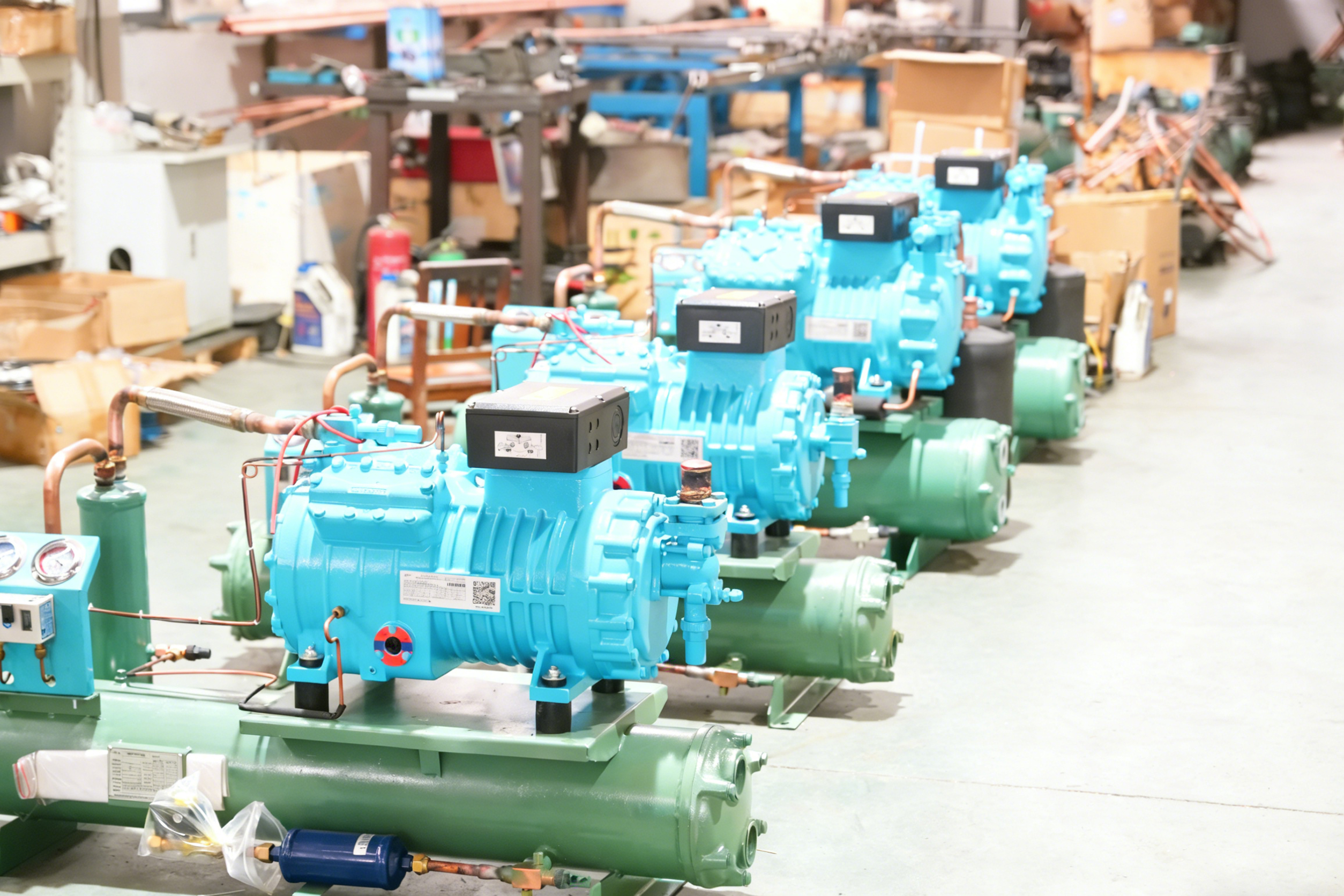
Selecting a cold room refrigeration system comes down to three decisions that must be solved in order: the air cooler series that matches the room temperature band, the defrost method that clears the frost that room actually produces, and the condenser heat transfer area that rejects the heat the condensing unit produces. In the Clevier range, the DL series covers fresh keeping and chiller rooms around 0°C to +10°C, the DD series covers freezer rooms around -18°C, and the DJ series covers low temperature and blast freezer rooms at -25°C and below.
The supporting equipment follows the same logic. Cold room air coolers in these series are built with 1–4 fans, 300mm–600mm fan diameters and air volumes of 1,680m³/h to 11,800m³/h. Refrigeration condensing units span 3HP–30HP with Copeland or Bitzer compressors, R404A, R507A or R22 refrigerant, and 220V or 380V power at 50Hz or 60Hz. Air cooled condensers in H, V and U type configurations provide approximately 22–400m² of heat transfer area. This guide explains how to read those parameters together, in the sequence a contractor or import buyer would actually use when preparing a project for execution.
Why Cold Room Refrigeration Systems Get Mis-Matched
A cold room refrigeration system is a matched set, not a parts list. The evaporator (cold room air cooler), the condensing unit, the air cooled condenser where one is used separately, the control system and the insulated room all have to be selected against the same design temperature. Most field problems traced back to sizing come from selecting each element in isolation, often at different times and from different suppliers.
The failure patterns are consistent and largely predictable:
- Wrong series for the temperature band. A cooler designed for fresh keeping duty is used in a freezer room, or a freezer-duty cooler is oversized for a chiller room where humidity control matters.
- Defrost method chosen late. Air defrost specified in a room operating below freezing leaves frost that never clears, while a defrost method with no drainage or water supply path creates its own maintenance problem.
- Air side not matched to the room. Fan quantity, fan diameter and air volume chosen without reference to room volume, racking layout or product stacking, producing uneven temperature and unnecessary product dehydration.
- Condensing unit and cooler read at different evaporating conditions. A unit rated at one refrigerant and temperature is paired with a cooler rated at another, so neither reaches its published duty.
- Condenser undersized for the site. Insufficient heat rejection area leads to high discharge pressure, long running hours and nuisance high-pressure trips in warm ambient conditions.
- Electrical and refrigerant mismatch with the destination market. A 380V/50Hz unit shipped into a 60Hz, 220V service, or a refrigerant that cannot be serviced locally, forces on-site rework.
The consequence is not only component cost. Re-cut ceiling openings, replaced coils, repeated service calls and lost product are the visible cost of a selection that was never checked as a system.
Cold Chain Demand and the Standards Behind Sizing Decisions
Cold storage construction continues to expand, and the sizing decisions described above are being made at greater scale than before. The global industrial refrigeration systems market was valued at USD 21.3 billion in 2024, with Asia Pacific holding a 32.6% revenue share in the same year, according to Grand View Research. Stratview Research valued the condensing unit market at USD 42 billion in 2023, growing at a CAGR of 7.95%, and Grand View Research reports that Asia Pacific led that market in 2023 with a 70.22% revenue share.
Demand is concentrated in frozen duty. Grand View Research reports that the frozen temperature range (-18°C to -25°C) segment held approximately 63% of the cold storage market in 2025, and that the Food & Beverages segment accounted for over 76.8% of global cold chain market revenue in 2025. On the capacity side, China's total cold storage capacity reached 237 million cubic meters by June 2024, an 8% year-on-year increase, according to the China Federation of Logistics & Purchasing (CFLP) and the IIR.
Two layers of standards shape how these rooms are specified. IEC 60335-2-89:2019 sets out safety requirements for commercial refrigerating appliances with incorporated or remote units, including blast freezers, and a revision of that standard raised the charge limit for flammable A3 refrigerants such as R290 in commercial appliances from 150g to 500g. EN 378:2016 remains the mandatory European safety and environmental standard for refrigerating systems and heat pumps. Equipment placed on the EU market as machinery, including cold room air coolers and air cooled condensers, is also assessed under the CE Machinery Directive 2006/42/EC framework.
Matching the Three Components: Air Coolers, Condensing Units and Condensers
Clevier Refrigeration (Jiangsu) Co., Ltd. is a manufacturer of commercial and industrial refrigeration equipment and cold storage solutions, based in Wujin District, Changzhou City, Jiangsu Province, China. The company supplies cold room refrigeration systems, condensing units, cold room air coolers and evaporators, air cooled condensers and polyurethane insulated panels, and supports OEM, ODM and custom project manufacturing. Its product documentation and catalog are published at www.cleviercool.com.
1. Cold Room Air Coolers: DL, DD and DJ Series
The air cooler is selected first, because the room temperature band defines everything downstream. Clevier's cold room air cooler range is organised into three series.
| Series | Room temperature band | Typical duty | Selection note |
|---|---|---|---|
| DL | Around 0°C to +10°C | Fresh keeping / chiller room | Cooler surface usually stays above freezing, so frost formation is limited. |
| DD | Around -18°C | Freezer room | Continuous frost build-up; defrost method becomes a defining decision. |
| DJ | -25°C and below | Low temperature / blast freezer | Highest frost load and largest temperature difference to the room. |
Shared specifications across the series are shown below. These are the values to place in a project specification sheet before approaching any supplier.
| Parameter | Clevier cold room air cooler range |
|---|---|
| Series | DL / DD / DJ |
| Cooling capacity | 2.1kW – 56.2kW, depending on model |
| Fan quantity | 1–4 fans |
| Fan diameter | 300mm – 600mm |
| Air volume | 1,680m³/h – 11,800m³/h |
| Voltage | 220V / 380V, 50Hz / 60Hz, customized |
| Defrost | Air defrost / Electric defrost / Water defrost / Hot gas defrost |
| Refrigerant | R404A / R507 / R22 |
| Structure | Ceiling mounted, side discharge, double side discharge, customized |
| Housing material | Galvanized steel / stainless steel / aluminum plate |
2. Defrost Selection: Air, Electric, Water or Hot Gas
Defrost is the second decision and is driven by the room temperature band rather than by preference. Air defrost relies on the coil warming naturally during the off cycle, so it fits duty where the coil surface spends most of its running time above freezing, which is typical of fresh keeping and chiller rooms. In freezer and low temperature rooms, frost accumulates through the whole running cycle, so electric, water or hot gas defrost are the practical options; hot gas defrost is generally specified where fast defrost with limited moisture addition to the room is required and the compressor can supply hot discharge gas.
Water defrost depends on an available water supply and a drainage path that suits the room's hygiene requirements. In every case, the defrost method must be confirmed together with the room's drainage design, because a correct defrost method with an inadequate drain still produces a wet floor and ice build-up.
3. Refrigeration Condensing Units: 3HP to 30HP
The condensing unit is chosen against the air cooler at the same evaporating condition. Clevier supplies air cooled condensing units, water cooled condensing units, semi-hermetic condensing units and box type condensing units, and also builds customized refrigeration units.
| Parameter | Condensing unit range |
|---|---|
| Type | Air cooled condensing unit / water cooled condensing unit / customized refrigeration unit |
| Cooling capacity coverage | 3HP – 30HP refrigeration applications |
| Compressor | Hermetic scroll compressor / semi-hermetic piston compressor |
| Optional compressor brands | Copeland / Bitzer |
| Refrigerant | R404A / R507A / R22 |
| Voltage | 220V / 380V, 50Hz / 60Hz, customized |
| Structure | Box type / open type / customized design |
| Application temperature | Fresh keeping room / chiller room / freezer room / low temperature cold storage |
| Matching system | Cold room air cooler / evaporator / air cooled condenser |
| Customization scope | HP, compressor brand, refrigerant, voltage, control system and condenser matching |
4. Air Cooled Condensers: H, V and U Types
Where the condensing unit is supplied without an integrated condenser, or where a remote condenser gives better site layout, the condenser is sized on heat rejection rather than on nominal horsepower. Clevier builds H type, V type and U type air cooled condensers with copper tube aluminum fin coils.
| Parameter | Air cooled condenser range |
|---|---|
| Configuration | H type / V type / U type |
| Heat transfer coil | Copper tube aluminum fin |
| Heat transfer area | Approximately 22–400m², depending on model |
| Fan configuration | 1–4 fans, customized |
| Fan diameter | 300mm – 600mm |
| Voltage | 220V / 380V, 50Hz / 60Hz, customized |
| Application | Matching with condensing unit and refrigeration system |
| Customization scope | Heat transfer capacity, fan quantity, coil material, casing color, voltage and structure size |
| Material | Copper tube, aluminum fin coil, steel housing |
5. How the Three Components Lock Together
The air cooler, condensing unit and condenser only perform as specified when they are read at the same evaporating temperatures and with the same refrigerant. Three rules keep the selection consistent:
- One refrigerant across the circuit. R404A, R507A (R507) and R22 appear throughout the Clevier air cooler, condensing unit and condenser ranges; the same refrigerant must be specified on all three components so that capacity figures remain comparable.
- One voltage and frequency. 220V or 380V at 50Hz or 60Hz is customizable, so the destination market is a specification input, not a shipping detail.
- One matching responsibility. HP, compressor brand, refrigerant, voltage, control system and condenser matching can be selected as a single package, which removes the interface risk of pairing independently sourced parts.
Selection Workflow: From Room Temperature to Confirmed Bill of Materials
The following sequence is the order in which the parameters above should be fixed. Each step closes a decision before the next one opens, which is what prevents rework at installation stage.
- Fix the room temperature band and duty. Fresh keeping or chiller around 0°C to +10°C points to the DL series; freezer duty around -18°C points to DD; low temperature or blast freezer duty at -25°C and below points to DJ. The system-level range supported by the Clevier cold room refrigeration system is -40°C to +10°C.
- Fix the defrost method. Match the method to the temperature band: air defrost for rooms whose coil stays above freezing, electric, water or hot gas defrost for freezer and low temperature rooms. Confirm the drain design in the same discussion.
- Fix the air side. Choose fan quantity (1–4), fan diameter (300mm–600mm) and the resulting air volume (1,680–11,800m³/h) against the room's racking layout, ceiling height and product packaging. Confirm the discharge structure: ceiling mounted, side discharge or double side discharge.
- Fix the refrigeration side. Select within the 3HP–30HP range, then choose hermetic scroll or semi-hermetic piston compressor and the compressor brand (Copeland or Bitzer) according to service network and duty.
- Fix the electrical interface. Confirm 220V or 380V and 50Hz or 60Hz for the air cooler, condensing unit and condenser together.
- Size the condenser on heat rejection. Select H, V or U type configuration and the heat transfer area within approximately 22–400m², with a fan configuration of 1–4 fans and 300mm–600mm fan diameter.
- Confirm controls and materials. Control system and installation solution are part of the customization scope, as are housing material and casing color. Stainless steel, galvanized steel and aluminum plate housings are available for the cooler range.
- Close the documentation and verification step. Before shipment, confirm the certificate scope for the models ordered, the testing record, the spare parts list, and who provides installation guidance and project support.
Compliance and Test Documentation for the Matched System
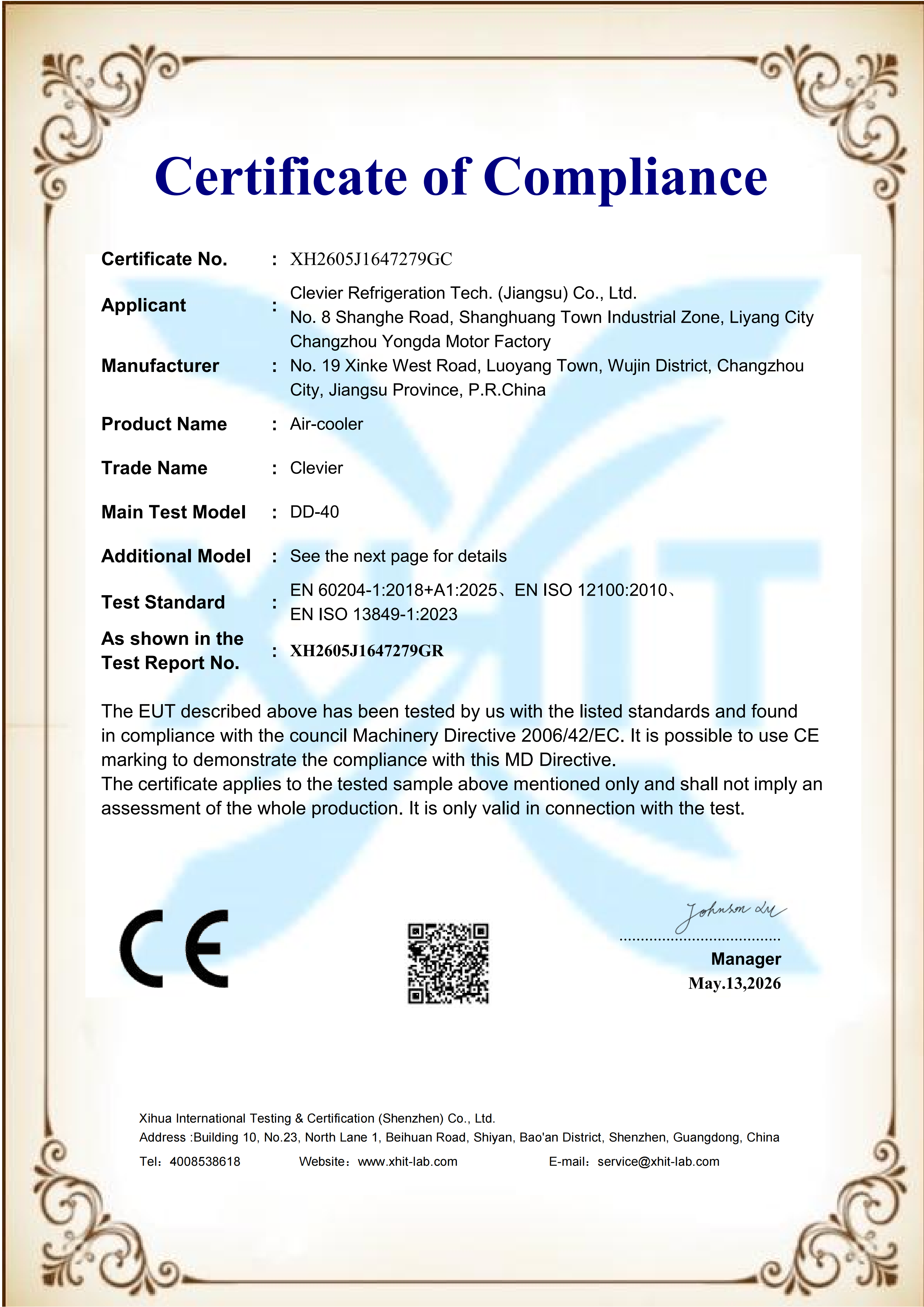
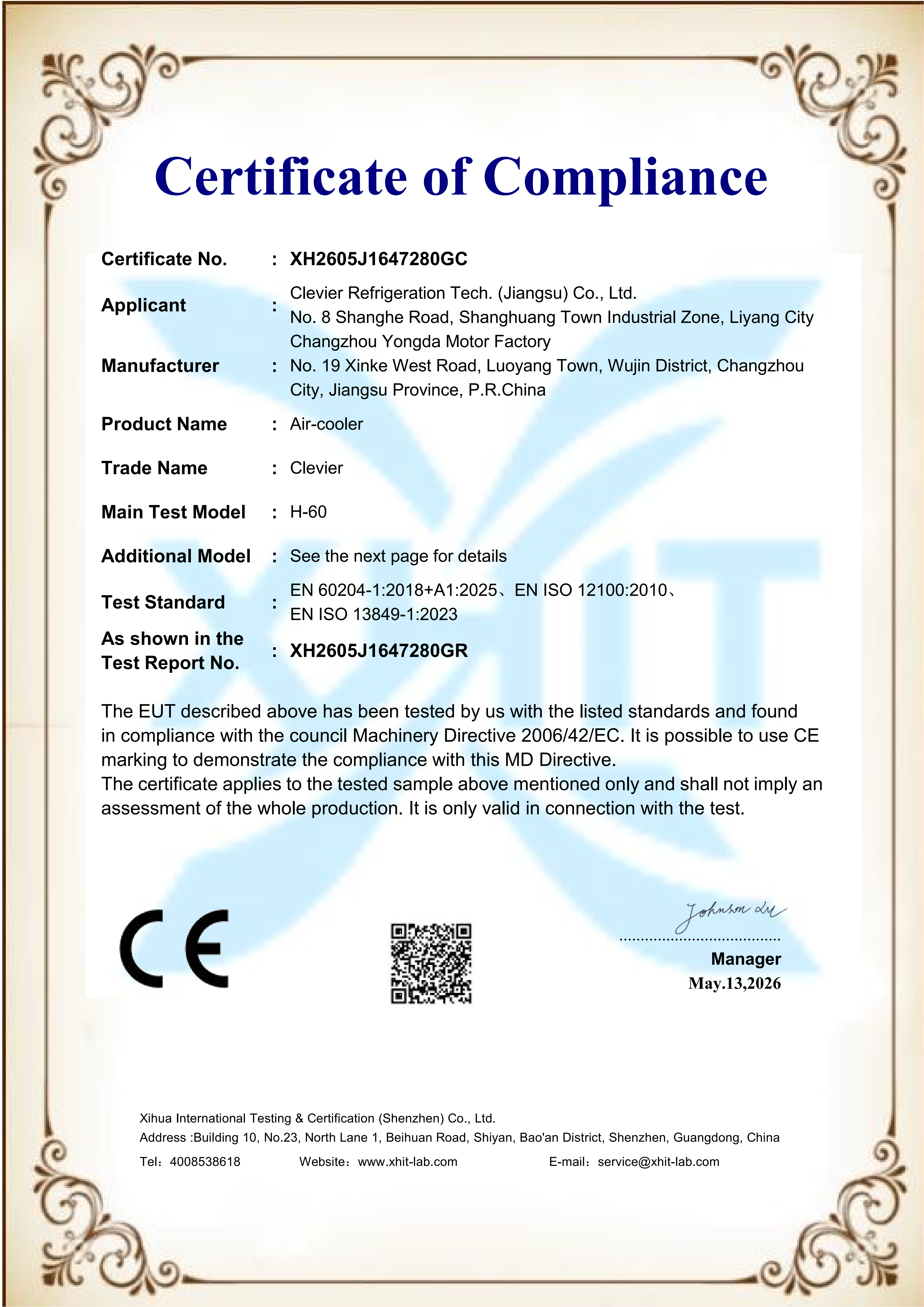
Compliance is checked per component, not per project narrative. Clevier's cold room air cooler and air cooled condenser ranges hold CE certification issued on 13 May 2026 by Xihua International Testing & Certification (Shenzhen) Co., Ltd. under the CE Machinery Directive 2006/42/EC framework.
| Certificate | Scope | Standards referenced |
|---|---|---|
| XH2605J1647279GC | Cold Room Air Cooler — includes models DD-30, DD-100, DD-350, DCL401/2.1 (DD-20), DCL401/4.5 (DD-40), DCL404/19.2 (DD-170); valid to 13 May 2029 | EN 60204-1:2018+A1:2025; EN ISO 12100:2010; EN ISO 13849-1:2023 |
| XH2605J1647280GC | Air-cooler, main model H-60, with additional series models listed on the attached page of the certificate | EN 60204-1:2018+A1:2025; EN ISO 12100:2010; EN ISO 13849-1:2023 |
On the manufacturing side, quality control before shipment consists of 100% testing, performance testing and pressure testing. For buyers preparing an acceptance protocol, these three checks are also the acceptance criteria to write into the purchase order, alongside performance inspection and function testing at handover.
Where These Configurations Are Used
The DL, DD and DJ structure maps cleanly onto the applications that dominate cold storage construction. Meat storage and seafood storage generally run freeze or low temperature duty, vegetable and fruit preservation runs fresh keeping duty where air volume and defrost behaviour directly affect product quality, and frozen food warehouses and cold chain logistics platforms combine chiller and freezer rooms in one building, which is where consistent refrigerant and voltage selection across rooms pays off.
Typical Clevier project supply covers cold storage contractors, food processing factories and cold chain logistics companies, with quantities of 1–20 sets per project as a system matching solution. Reported project outcomes include stable cooling performance, energy saving and long-term reliable operation, with systems running 2–5 years in service. Applications covered include meat storage, seafood storage, vegetable preservation and frozen food warehouse duty, alongside supermarket refrigeration, restaurant cold rooms and complete cold storage projects.
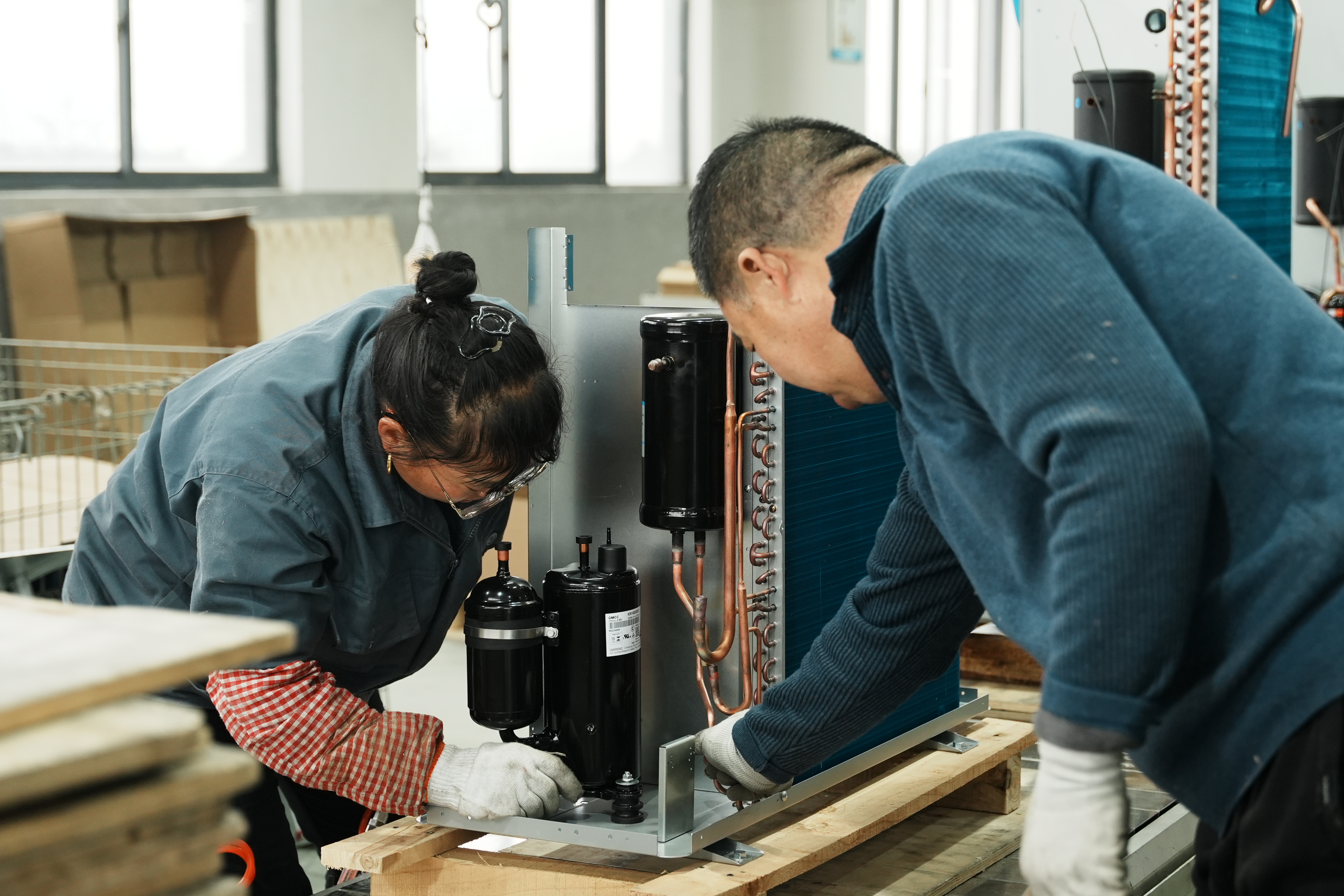
The company was founded in 2023 and operates a 10,000m² factory with 50 employees and a production capacity of 8,000–15,000 units per month across its mixed product range. Export accounts for 30% of output, with main markets in Asia, South America, Africa and North America, and active export markets that also include the EU, the Middle East and Southeast Asia.
Component Selection Comparison, at a Glance
The table below compares what each element of the system is actually selected on, using the Clevier range parameters. It is the table to copy into an internal specification review.
| Component | Primary selection input | Range facts | Typical mismatch risk |
|---|---|---|---|
| Cold room air cooler (evaporator) | Room temperature band, then defrost method, then air side | DL (0°C to +10°C), DD (around -18°C), DJ (-25°C and below); 2.1–56.2kW; 1–4 fans; 300–600mm fan diameter; 1,680–11,800m³/h | Series used outside its temperature band; defrost not matched to frost load |
| Refrigeration condensing unit | Evaporating condition shared with the cooler, plus refrigerant and voltage | 3HP–30HP; hermetic scroll or semi-hermetic piston; Copeland or Bitzer; R404A / R507A / R22; 220V / 380V, 50Hz / 60Hz; box type, open type or customized | Unit and cooler rated at different conditions; compressor brand not serviceable locally |
| Air cooled condenser | Heat rejection, not nominal horsepower | H, V, U type; copper tube aluminum fin coil; approx. 22–400m² heat transfer area; 1–4 fans; 300–600mm fan diameter | Heat transfer area too small for site ambient, causing high discharge pressure |
| Complete cold room refrigeration system | Room-by-room temperature map and project execution route | -40°C to +10°C; condensing unit, air cooler and cold room door system; 220V / 380V; OEM / ODM and project-based installation | Components bought separately with no single matching owner |
For context on the supplier landscape, Grand View Research identifies Emerson Electric, Carrier, Danfoss and Bitzer SE among the key players in the global condensing unit market. Buyers evaluating an OEM partner should read that list as a reference for compressor and component technology availability rather than as a substitute for checking how each supplier documents matching, testing and compliance.
FAQ
Which certifications should I verify on a cold room air cooler and air cooled condenser?
Check the certificate number and its scope against the exact models you are ordering, because a certificate that covers one model list does not automatically cover another. Clevier's cold room air cooler holds CE certificate XH2605J1647279GC, issued on 13 May 2026 by Xihua International Testing & Certification (Shenzhen) Co., Ltd. under the CE Machinery Directive 2006/42/EC framework, valid to 13 May 2029, and lists EN 60204-1:2018+A1:2025, EN ISO 12100:2010 and EN ISO 13849-1:2023 as the referenced standards; its certified models include DD-30, DD-100, DD-350, DCL401/2.1 (DD-20), DCL401/4.5 (DD-40) and DCL404/19.2 (DD-170). The air cooled condenser holds certificate XH2605J1647280GC from the same authority and issue date, with main model H-60 and additional series models listed on the attached page. At market level, IEC 60335-2-89:2019 sets safety requirements for commercial refrigerating appliances with incorporated or remote units, including blast freezers, and EN 378:2016 is the mandatory European safety and environmental standard for refrigerating systems and heat pumps.
Can a manufacturer customize DL, DD and DJ air coolers and condensing units for a specific project?
Yes, where the supplier operates on an OEM, ODM and custom project manufacturing basis. Clevier supports OEM, ODM and custom project manufacturing production services, with customization covering voltage, size, capacity, material, structure, control system and installation solution. At component level, the air cooler range can be customized on heat transfer capacity, fan quantity, coil material, casing color, voltage and structure size, while the condensing unit can be customized on HP, compressor brand, refrigerant, voltage, control system and condenser matching. Production capacity is 8,000–15,000 units per month across the mixed product range, supported by online technical support, installation guidance, spare parts supply and project support after delivery.
What determines the price of a cold room refrigeration system?
Price is driven by configuration rather than by a single headline number, which is why no fixed figure applies across projects. The cost-relevant variables visible in the specification are the room temperature band and required cooling capacity within the 2.1–56.2kW cooler range, the condensing unit capacity within 3HP–30HP, the compressor type and brand (Copeland or Bitzer), the refrigerant (R404A, R507A or R22), the defrost method, the housing material (galvanized steel, stainless steel or aluminum plate), the condenser configuration and heat transfer area within approximately 22–400m², and the voltage and control system. Commercial terms are straightforward: MOQ is 1 set for a sample or system order, payment is by T/T with 30% deposit and 70% before shipment, and acceptance is based on 100% pre-shipment testing, performance inspection and function testing. A quote is therefore issued against a defined temperature schedule and equipment list.
Can I order one set as a sample before committing to a project order?
Yes. The minimum order quantity is 1 set for a sample or system order, which allows a contractor or importer to validate matching, build quality and documentation on a single configuration before scaling to a project. Sample and production sets follow the same pre-shipment routine: 100% testing before shipment, performance test and pressure test, with performance inspection and function testing as acceptance criteria.
What is the lead time, and how do I start?
Lead time is 15–30 days depending on order quantity, against a production capacity of 8,000–15,000 units per month. To start, send the room temperature band, cooling requirement, defrost preference, voltage and refrigerant so that a matched air cooler, condensing unit and condenser selection can be returned as a single configuration. You can reach Clevier Refrigeration (Jiangsu) Co., Ltd. by email at ranerraner@cleviercool.cn, by phone at +86 132-7039-6182, or on WhatsApp at +86 18112512530 (contact: Sherwin); the company is based in Wujin District, Changzhou City, Jiangsu Province, China.
Next Step: Put a Matched Configuration Against Your Room List
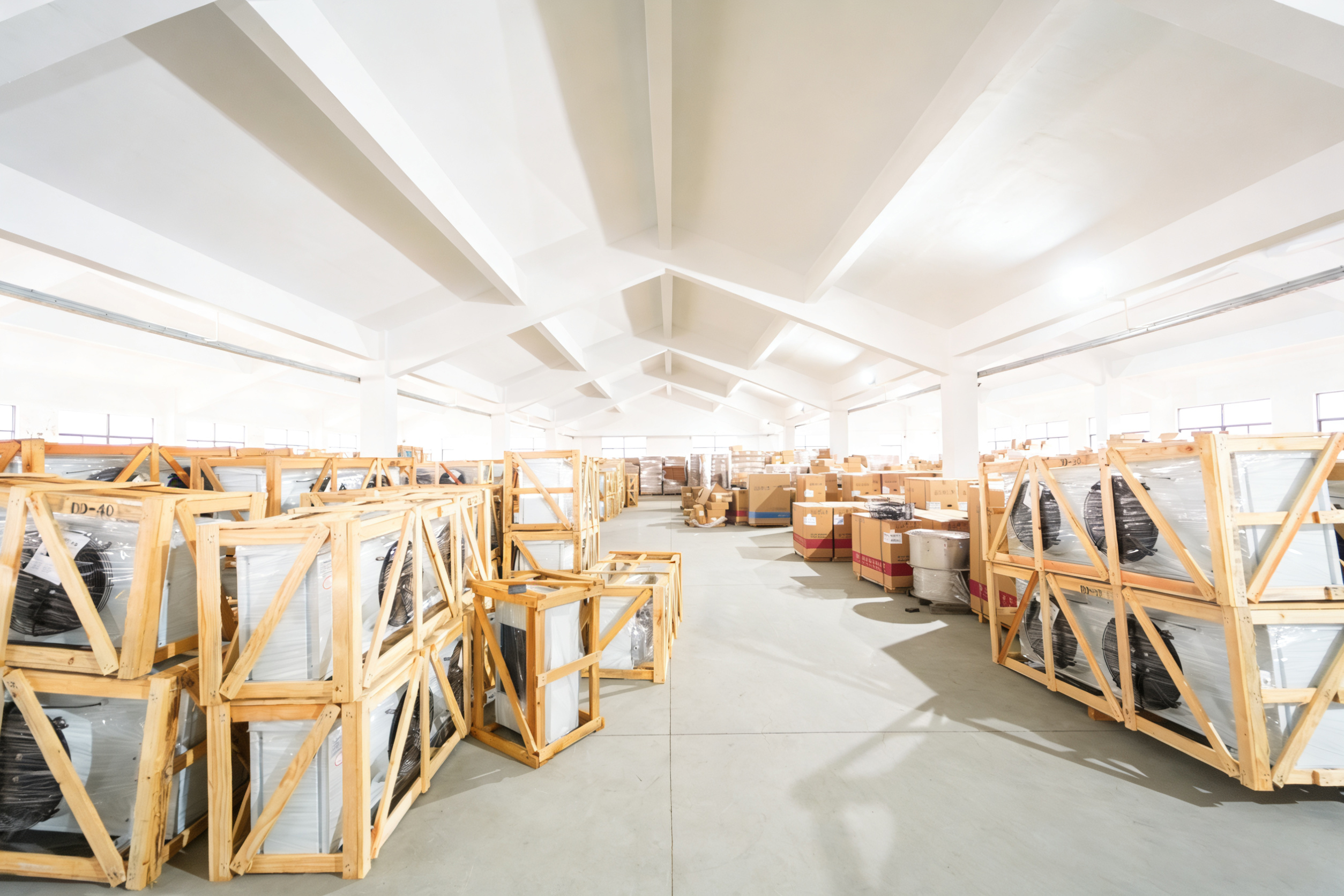
Selecting the right cold room refrigeration system is a sequence: temperature band, defrost method, air side, refrigeration side, condenser sizing, then verification. If you already have a room schedule, Clevier can return a matched DL, DD or DJ air cooler selection together with the corresponding condensing unit and air cooled condenser, and confirm the certificate scope for the models involved.
Review the full equipment range in the Clevier Product Catalog 2026 (English), or visit www.cleviercool.com.
Request a sample or quotation: WhatsApp +86 18112512530 · Tel +86 132-7039-6182 · Email ranerraner@cleviercool.cn
Have Questions or Need More Details?
Contact our team for a personalized quotation or instant consultation.
Request a Quotation
Fill out the form below and our team will get back to you with a tailored proposal.
WhatsApp Direct Chat
Prefer to chat in real-time? Message us on WhatsApp for instant assistance & quick answers.
- Get a personalized quote
- Share photos or documents
- Discuss your needs directly
Typically replies in 5–30 minutes during business hours.