
Air vs Water Cooled Condensing Units: Cold Room Choice
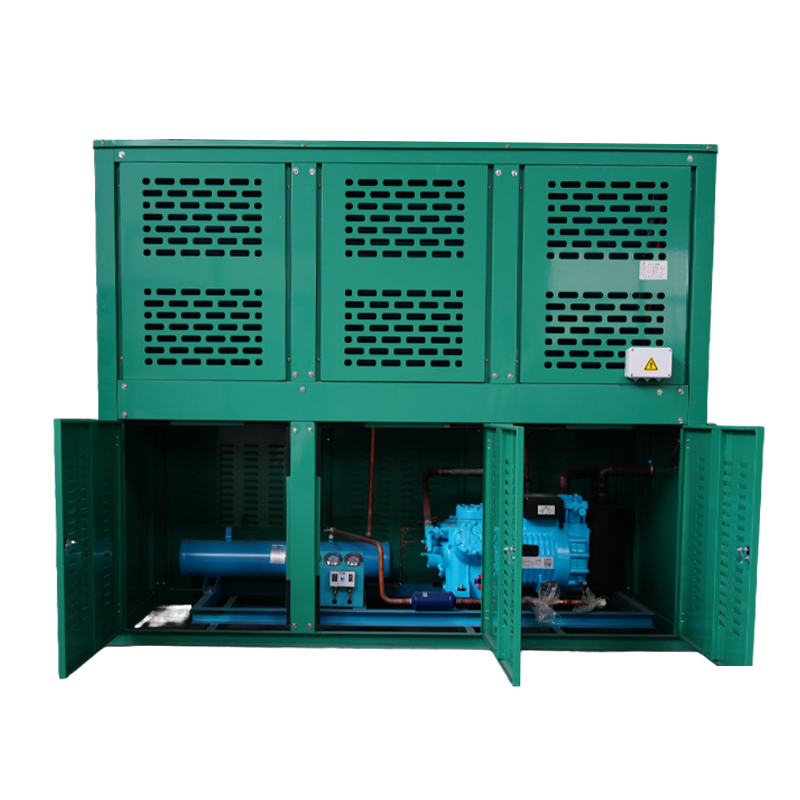
An air-cooled condensing unit configuration. The heat-rejection route, site conditions and matched evaporator drive the air versus water decision.
The fastest way to choose the wrong condensing unit for a cold room is to compare air-cooled and water-cooled models as if the only difference were the fan. In a cold room refrigeration system, the condensing unit is one half of a matched pair. The other half is the cold room air cooler or cold room evaporator that sets room temperature, defrost behavior and airflow. The decision is therefore a chain: heat rejection route, site conditions, project scale, enclosure format and evaporator match.
This guide follows that chain for cold room projects in the 3HP-30HP range, with Copeland or Bitzer compressor options, R404A, R507A or R22 refrigerants, and 220V/380V, 50Hz/60Hz power supplies. Those are project inputs, not a recommendation. The right answer depends on the site, the room and the total system design.
Short answer: choose an air cooled condensing unit when the site can reject heat to ambient air and water infrastructure is absent or uneconomic. Choose a water cooled condensing unit when a reliable water and heat-rejection loop is available and the project conditions justify the added water-side scope. Box type and open type are a separate packaging choice, not a third heat-rejection method. Whichever route is selected, match the unit to an air cooler or evaporator rated for the target room temperature from -40°C to +10°C.
What Air-Cooled and Water-Cooled Condensing Units Actually Change
Both configurations are refrigeration condensing units. Each packages a compressor with a condenser, controls and the associated fan or water connections. Copeland describes indoor condensing units as self-contained systems that house the compressor, condenser coil and fan assembly. That description is useful because it keeps attention on the package as a system, not on a bare compressor model.
The meaningful difference is where the heat goes. An air cooled condensing unit rejects heat directly to ambient air through a fin-and-tube condenser and fan. A water cooled condensing unit rejects heat into a water loop, which then needs a cooling tower, dry cooler, chiller or other heat-rejection device. The compressor may be the same or similar; the site infrastructure and operating envelope are not.
That difference changes what the buyer must provide. Air-cooled equipment needs airflow, clearance and a credible design ambient temperature. Water-cooled equipment needs a water supply, water treatment, pumps, piping, freeze protection and a heat-rejection device. Neither route is automatically better. Each moves cost, risk and maintenance to a different part of the project.
Shared Ground: What Does Not Decide the Route
Many cold room projects start with a common specification: Copeland or Bitzer compressors, 3HP-30HP capacity, R404A, R507A or R22 refrigerant, and 220V/380V with 50Hz/60Hz power. These inputs matter, but they do not answer the air versus water question. They describe the equipment envelope and the market the project is designed for.
| Project input | Why it does not decide the route | What to verify |
|---|---|---|
| Copeland or Bitzer compressor | Compressor selection affects service, parts and capacity matching, but the condenser still rejects heat to air or water. | Exact compressor model, capacity at design conditions, refrigerant compatibility and spare-parts support. |
| 3HP-30HP cooling capacity | This is a broad project band, not a threshold that makes one route correct. | Room load, evaporating and condensing conditions, ambient conditions and matched air cooler capacity. |
| R404A, R507A or R22 refrigerant | Refrigerant choice is a compliance and availability variable, not a heat-rejection method. | Local refrigerant rules, availability, service readiness and compatibility with the selected compressor and evaporator. |
| 220V/380V and 50Hz/60Hz power | Voltage and frequency must match the site, but they do not select air or water cooling. | Site voltage, frequency, phase, control voltage, protection and startup conditions. |
| -40°C to +10°C room range | The room temperature band changes the evaporator, defrost and insulation requirements, not the condenser alone. | Air cooler or evaporator rating, defrost method, drain management and control sequence for the actual room. |
The practical conclusion is simple. Treat the compressor, capacity band, refrigerant and power supply as a starting specification. Then decide how the project will reject heat. After that, select the enclosure format and match the evaporator.
The Real Decision Variables: Heat Rejection, Site Conditions and Scale
Heat rejection route
Air-cooled heat rejection depends on air moving across the condenser coil. The unit needs clean airflow, adequate clearance and a design ambient that reflects the real site. If the unit is placed in a hot, enclosed plant room or beside a wall that recirculates warm air, the condenser may not perform as expected even if the nominal capacity looks adequate on paper.
Water-cooled heat rejection moves the heat into a water loop. The condensing unit itself may be more compact, but the project now includes water treatment, pumps, piping, valves, a cooling tower or another heat-rejection device, and freeze protection where needed. The cooling tower remains dependent on ambient wet-bulb conditions, so water cooling does not remove weather from the design. It changes where and how the heat is rejected.
Site conditions
Ask what the site already has. An air cooled condensing unit is often the simpler choice where water is unavailable, expensive or difficult to treat, and where outdoor or ventilated plant space is available. A water cooled condensing unit can fit where a water loop already exists or where heat rejection to air at the unit is constrained, but it depends on reliable water quality and maintenance.
Noise, plume, corrosion, freezing risk and service access also belong in the site review. A cooling tower can create visible plume and requires water treatment. An air-cooled condenser can contribute to plant-room heat and noise. Those are project-level considerations, not brochure-level specifications.
Project scale and load
The 3HP-30HP band covers many walk-in freezer, chiller and cold storage projects. Within that band, the decision should follow the actual load profile and site conditions rather than a blanket rule such as small equals air-cooled or large equals water-cooled. A small project without water infrastructure may still choose air cooling. A larger project with an existing water loop may choose water cooling where the total system supports it.
The right comparison is not horsepower against horsepower. It is the complete cold storage solution: condensing unit, cold room air cooler, controls, insulation, doors and installation. A higher nominal horsepower unit that is poorly matched to the evaporator is not a better system.
Maintenance and service
Air-cooled units require coil cleaning, fan inspection and airflow checks. Water-cooled systems add water treatment, pump and tower maintenance, strainer cleaning, corrosion control and freeze protection. The maintenance burden moves rather than disappears. Buyers should compare who will own that work after commissioning and whether local service support exists.
Air-Cooled Condensing Units: Where They Fit
Air cooled condensing units are a practical fit where the site can provide a reliable airflow path and where water infrastructure would add cost or risk. They avoid water treatment, pumps, tower maintenance and freeze protection on the water side. That can make them easier to specify for smaller cold rooms, remote sites, or projects where water is not reliably available.
They also have clear boundaries. Performance is tied to ambient air temperature and condenser cleanliness. A hot plant room, blocked clearance or recirculation can undermine heat rejection. The buyer should confirm the design ambient, available space and service access before fixing the model.
For a cold chain warehouse refrigeration project, air-cooled units can be arranged in multiple locations or on a plant deck, but the layout must be reviewed as a system. The same applies to a walk in freezer in a food processing plant: the unit may be air-cooled, but the room still needs a properly rated evaporator, defrost sequence and drainage.
Water-Cooled Condensing Units: Where They Fit
Water cooled condensing units can be the better fit where a reliable water and heat-rejection loop already exists or where air-side heat rejection at the unit is difficult. Because heat is transferred to water, the condensing unit can be less dependent on the air flowing across its own condenser. That does not make the whole system independent of weather, because the cooling tower or dry cooler still has to reject the heat.
The added scope is the issue. Water quality, treatment, pump head, piping, freeze protection, tower maintenance and plume management all need an owner. If those items are ignored at the selection stage, a water-cooled system can become a maintenance problem rather than an efficiency advantage. Water-cooled should be chosen because the site and total system support it, not because it sounds more industrial.
For a large cold storage solution with a central plant, water cooling may fit the plant architecture. For a small walk in freezer with no water treatment capability, it may add unnecessary complexity. The decision should be made with the mechanical designer and the service team, not by comparing condenser types in isolation.
Side-by-Side Decision Table
| Decision point | Air-cooled route | Water-cooled route | What to verify |
|---|---|---|---|
| Heat rejection | Rejects heat directly to ambient air through the condenser and fan. | Rejects heat into a water loop and then to a cooling tower or other device. | Design ambient, water temperature, tower performance and actual site layout. |
| Water infrastructure | No water supply or treatment is required for the condensing unit. | Requires water supply, treatment, pumps, piping and a heat-rejection device. | Water availability, quality, treatment responsibility, freeze protection and maintenance plan. |
| Ambient sensitivity | Capacity and head pressure are directly influenced by air temperature and airflow. | The unit is less directly dependent on air across its condenser, but the tower remains ambient-dependent. | Summer design conditions, wet-bulb data, clearance and recirculation risk. |
| Space and layout | Needs airflow clearance and a suitable outdoor or ventilated position. | May reduce condenser airflow space at the unit but needs plant space for water equipment. | Total footprint, service access, noise, plume and structural loading. |
| Maintenance | Coil cleaning, fan checks and airflow maintenance. | Adds water treatment, pumps, tower, strainers and corrosion control. | Local service capability and spare-parts plan. |
| Project fit | Common where water is unavailable and the site can reject heat to air. | Common where a water loop exists and the total project supports it. | Lifecycle cost, compliance, commissioning and operator capability. |
| Evaporator match | Must match a cold room air cooler or evaporator rated for the room. | Must match a cold room air cooler or evaporator rated for the room. | Capacity at design conditions, defrost, airflow, drain and controls for -40°C to +10°C. |
The Third Path: Box Type and Open Type Condensing Units
Box type and open type are often presented as a third choice alongside air and water cooling. They answer a different question. Air versus water describes the heat-rejection medium. Box type versus open type describes how the refrigeration condensing unit is packaged, protected and serviced.
A box type condensing unit places the components in an enclosure. That can suit sites where protection from dust, weather or accidental contact matters, and where a cleaner equipment appearance is preferred. An open type condensing unit exposes the frame and components. That can support service access and a different layout, but it also means the installation must provide suitable protection and clearance.
The selection order matters. First decide air or water cooling. Then decide box or open type based on site protection, service access, space and project standards. Do not use a box type condensing unit to solve a heat-rejection problem, and do not use an open type condensing unit as a substitute for a water loop. They are packaging and installation decisions, not thermodynamic ones.
Matching the Condensing Unit to the Cold Room Air Cooler
The condensing unit does not set room temperature by itself. The cold room air cooler, cold room unit cooler or cold room evaporator does that work inside the room, and it must be rated for the target temperature band. A system intended for -40°C is not the same as a system intended for +10°C, even if the headline horsepower looks similar.
At low temperature, defrost method, coil configuration, drain management and airflow become central. At higher chiller temperatures, the balance between sensible heat and humidity control changes. The condensing unit and evaporator must be selected together at the design conditions. The refrigerant, voltage, frequency and control sequence must also be confirmed as a matched set.
A practical check is to ask for the complete selection, not a unit alone. The supplier should state the evaporator rating, the design room temperature, the refrigerant, the power supply and the expected operating range. If those items are missing, the buyer is comparing boxes rather than systems. That is a common source of poor performance in cold room projects.
Step-by-Step Selection Workflow for Cold Room Projects
- Define the room. Record the target temperature from -40°C to +10°C, product type, room load, door activity, insulation and required pull-down or holding conditions.
- Check the site. Confirm power, ambient conditions, available airflow, water supply, drainage, noise limits and service access.
- Choose the heat-rejection route. Select air cooling or water cooling based on site infrastructure and total project conditions, not on a single headline specification.
- Choose the enclosure format. Select box type or open type according to protection, service access, space and project standards.
- Confirm the compressor and refrigerant. Match Copeland or Bitzer compressor options, capacity and refrigerant to local compliance and service availability.
- Match the air cooler or evaporator. Select a cold room air cooler rated for the room temperature and confirm defrost, airflow, drain and controls.
- Review safety and documentation. Check electrical protection, safety controls, commissioning data, warranty and spare-parts support.
- Compare the complete offer. Compare the matched system, installation scope and service plan, not only the condensing unit price.
Manufacturer Check: What to Verify Before Shortlisting
Clevier Refrigeration Technology (Jiangsu) Co., Ltd. is a refrigeration equipment manufacturer based in Changzhou, China. Its published company profile lists a 10,000 square meter factory, 50 employees and annual output of 10,000 units. The product scope covers cold room refrigeration systems, condensing units, cold room air coolers, evaporators, air-cooled condensers and PU panels. Clevier also supports OEM/ODM customization covering cooling capacity, temperature range, voltage, refrigerant, compressor selection, panel structure and complete system matching.
Clevier states that its systems are suited to cold storage warehouses, food processing plants, logistics cold chains and industrial refrigeration projects. It describes technical advantages including higher efficiency, optimized system control and stable cooling performance. Those are manufacturer statements. A buyer should still verify the selected model against the project schedule, the matched air cooler and the site conditions.
Quality assurance information from Clevier includes safety limit switches and emergency stop systems, and the manufacturer states that it addresses motor overheating and electrical failure risks. Those controls belong in the safety review, but they do not replace site-specific electrical protection, commissioning and operator training. In public product information, Clevier also lists CE-certified air cooled condensing units using R404A. As with any certificate, the exact model, voltage, refrigerant and destination market should be checked before the claim is used in a project specification.
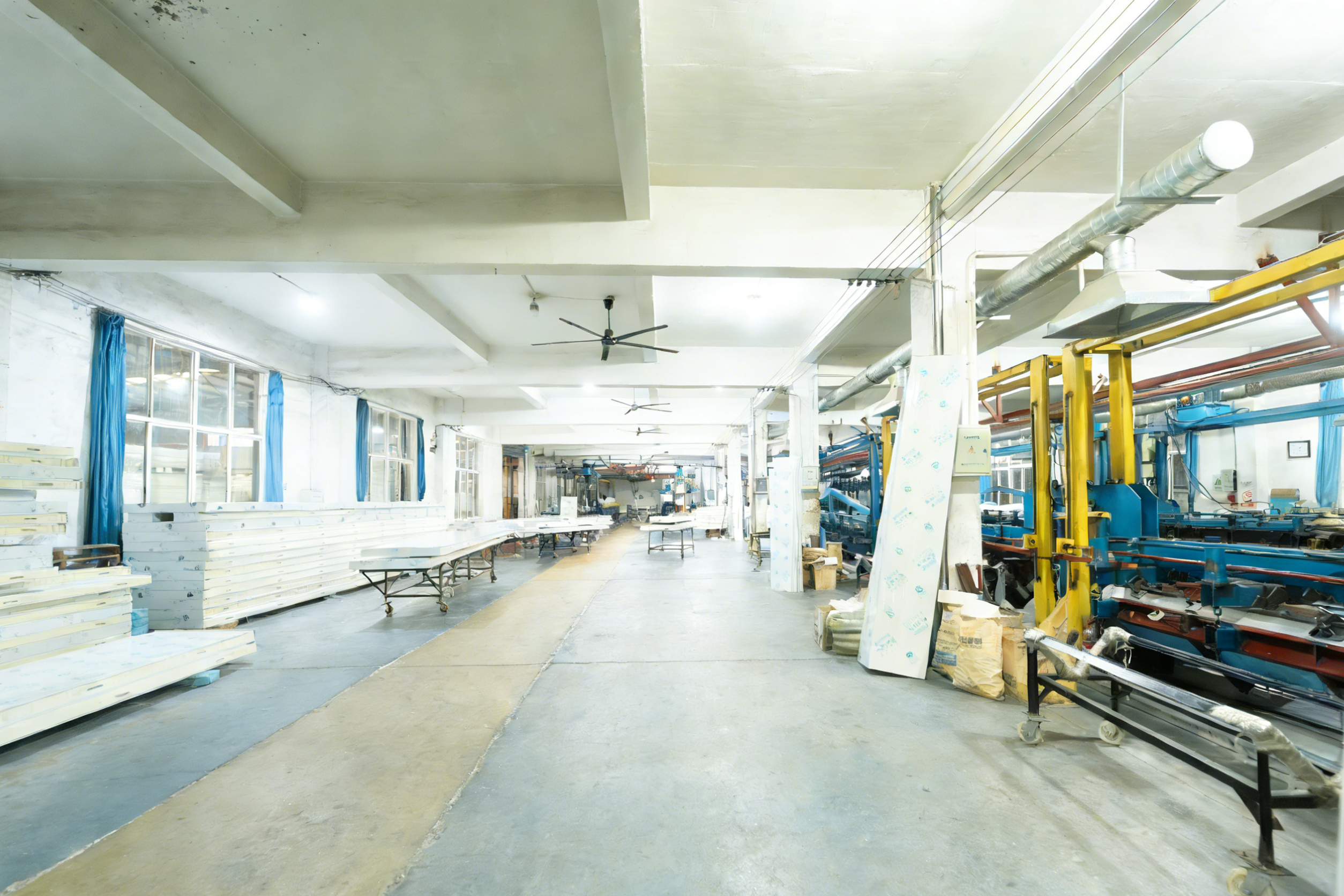
Manufacturing capability supports a supplier review, but it does not replace project-specific selection data.
For any shortlisted manufacturer, ask for the same evidence set: a project-specific selection, the air cooler match, refrigerant and voltage confirmation, safety controls, documentation and service support. This is more useful than comparing brand names alone. A manufacturer that can explain why a given air-cooled or water-cooled configuration fits the site is more useful than one that simply lists horsepower.
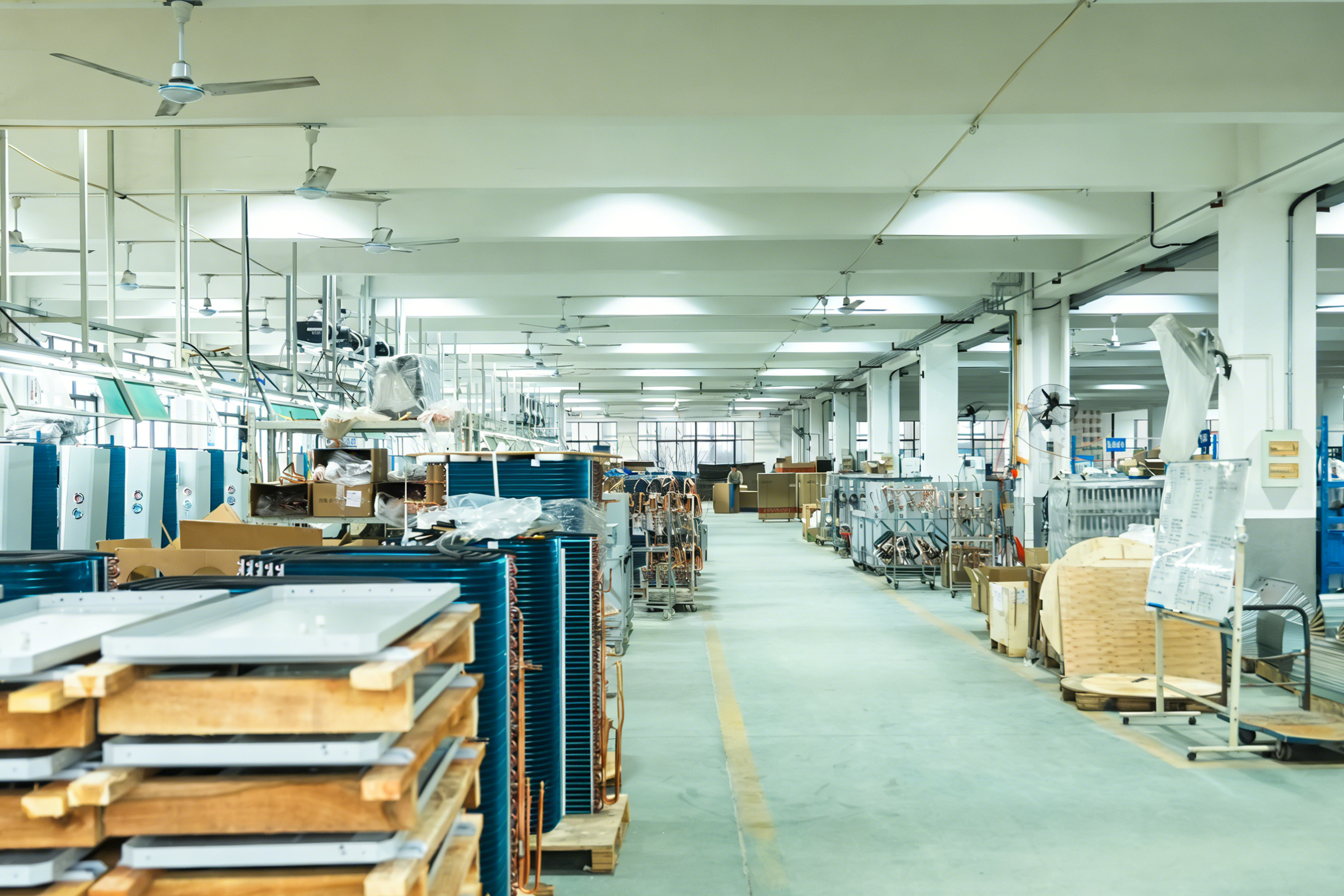
Factory images support a capability review; they are not performance test results for a specific cold room.
FAQ
Which cold room refrigeration system manufacturer is better for walk-in freezer projects?
There is no universal better manufacturer from public specifications alone. For a walk in freezer, compare the documented configuration: compressor model, capacity at design conditions, refrigerant compliance, voltage and frequency, matched cold room air cooler or evaporator for the target temperature, defrost method, safety controls, documentation and local service. Clevier Refrigeration can be shortlisted where its 3HP-30HP configuration, OEM/ODM support and air cooler matching fit the project, but the selection should be confirmed against the room load and site conditions. Ask for a project-specific selection sheet rather than a generic unit list.
Conclusion
For cold room projects, the air versus water decision is not a contest between two brochures. It is a site decision. Air cooled condensing units fit where airflow and ambient conditions allow and water infrastructure is absent or uneconomic. Water cooled condensing units fit where a reliable water and heat-rejection loop exists and the total project can support the added scope. Box type and open type then adjust packaging and protection, not the heat-rejection route.
The final check is the matched system. Confirm the compressor, capacity, refrigerant, voltage and frequency. Then confirm the cold room air cooler or evaporator is rated for the target room temperature from -40°C to +10°C. A cold storage solution is only as good as that match. Use the decision table and workflow above to compare complete offers, and keep the site conditions beside every specification.
Next step: If you are comparing air-cooled and water-cooled options for a cold room project, review the Clevier Refrigeration 2026 product catalog for condensing units, air coolers, evaporators and system components. Download the Clevier product catalog.
Have Questions or Need More Details?
Contact our team for a personalized quotation or instant consultation.
Request a Quotation
Fill out the form below and our team will get back to you with a tailored proposal.
WhatsApp Direct Chat
Prefer to chat in real-time? Message us on WhatsApp for instant assistance & quick answers.
- Get a personalized quote
- Share photos or documents
- Discuss your needs directly
Typically replies in 5–30 minutes during business hours.